
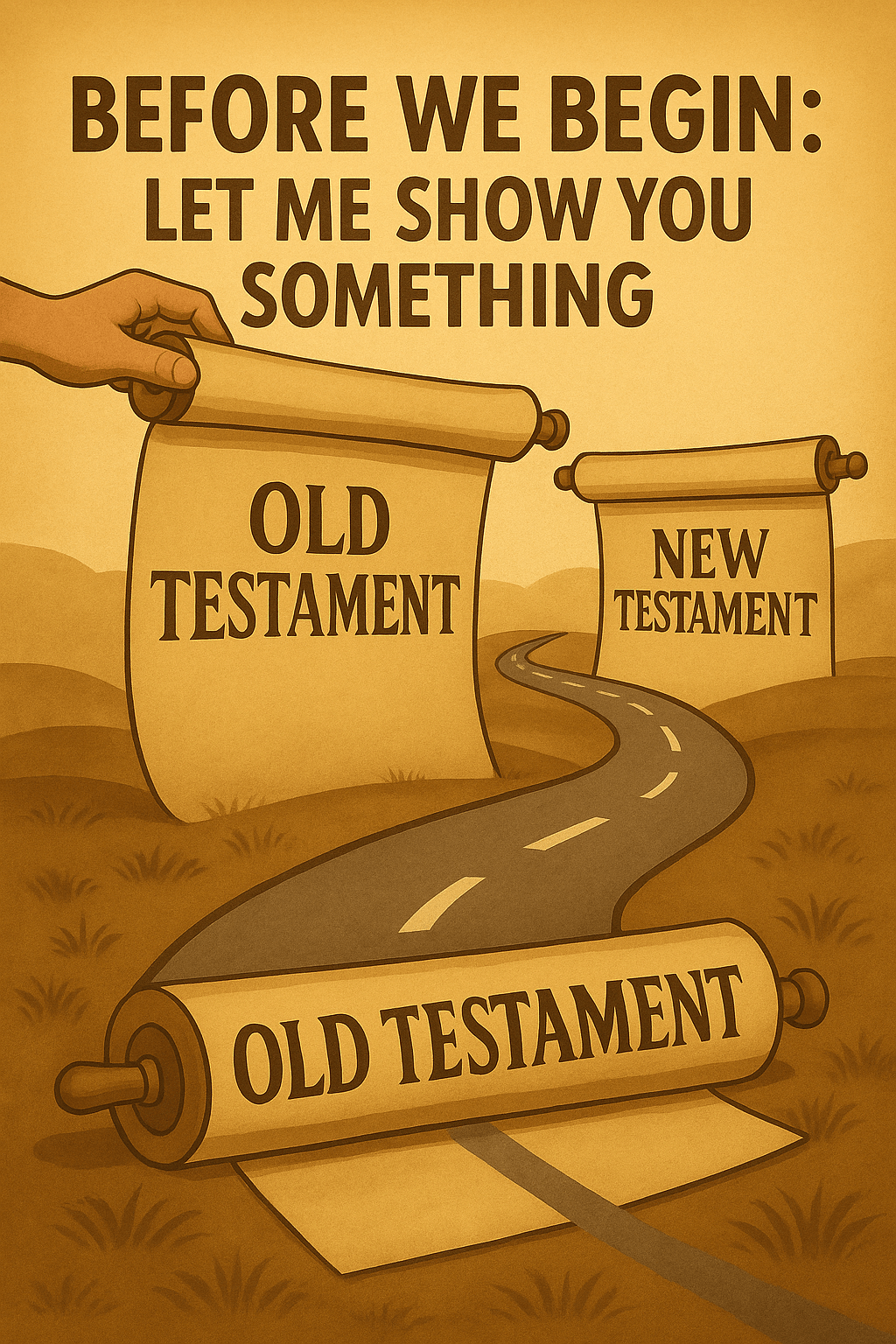
A full video breakdown of this article
Before We Begin: Let Me Show You Something

Think about any movie with a big twist. The first time you watch, early scenes look ordinary. But when the ending drops, you replay those moments in your head and realize they meant something totally different.

Take Get Out, for instance. Remember the roadside‑cop scene? At first the girlfriend seems to be shielding her boyfriend from racial profiling. By the final act you realize—she’s actually making sure there’s no paper trail. One moment flips from “heroic” to “sinister.”
Here’s the point:
The Old Testament sets the stage—you’re supposed to read it first. But once you’ve made it through the New Testament, especially the teachings of Jesus and His apostles, something changes. When you go back to the Old Testament, you can’t see it the same anymore.
Scenes that once looked like stand alone now clearly point to something greater. What felt like a full picture now looks like a shadow of something coming. You realize the Old wasn’t meant to be the final answer—it was meant to lead you to the one who is.
That’s what this post is about: learning to read the Bible in full context—starting with the Old, but interpreting it through the lens of the New. Just like in a movie, the ending gives meaning to everything that came before.
Quick example before we get in the bible.
A young Bible teacher had just finished preaching his very first sermon. Feeling proud, he hurried over to an experienced pastor who’d been listening from the front row.
Pastor, what did you think?” he asked.
The older pastor smiled politely but answered plainly: “It was an earnest effort, son—but the sermon itself was weak.
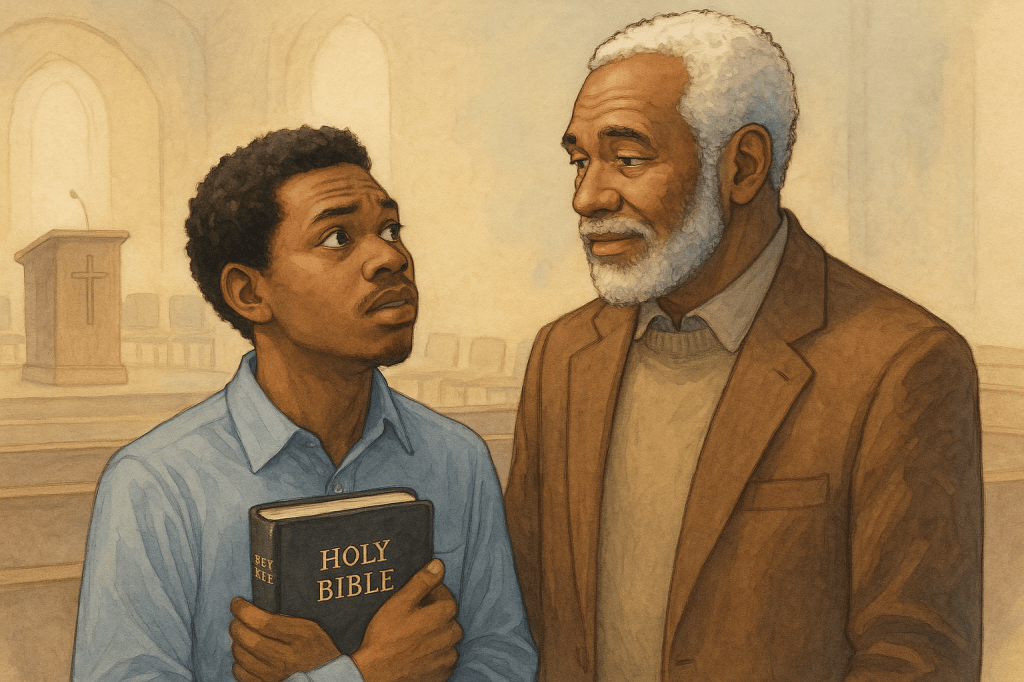
“Weak?” the young man blurted. “I spent days in commentaries! My outline was tight, my Greek word‑studies were solid, and my illustrations fit the text perfectly.”
The pastor nodded. “Your exegesis was sharp, and your delivery was clear. But tell me—where was Jesus?”
The young teacher frowned. “The passage was Exodus 17—the battle with Amalek while Moses held his hands up. It’s about war, endurance, and teamwork. Christ isn’t in the story, so I stayed with the text.”
The older pastor motioned for him to sit. “Let me tell you what my mentor once told me. In England, every little lane and village road eventually connects to the great highway, and every highway heads toward London. No matter where you start, if you keep driving, you’ll reach the capital.
“It’s the same with Scripture,” he continued. “Every passage—law, poetry, prophecy, or narrative—has a road that leads to the great Capital of the Bible: Jesus Christ.
Your task as a teacher isn’t finished until you’ve helped people travel that road.
Every Old‑Testament passage—whether law, poetry, or history—has a road that leads to Christ and the message He and the apostles teach in the New Testament. Your interpretation can’t veer off onto a side street that contradicts Jesus; it must merge with the highway of His gospel.
Luke 24:44 (KJV)
44 And he said unto them, These are the words which I spake unto you, while I was yet with you, that all things must be fulfilled, which were written in the law of Moses, and in the prophets, and in the psalms, concerning me.
Luke 24:45 (KJV)
45 Then opened he their understanding, that they might understand the scriptures,
He lifted the veil from their minds; passages about His suffering, death, and resurrection—words they’d known since childhood—suddenly made sense. The point is clear: even if we’ve read the Bible for years, we still need Christ, by His Spirit, to unlock its true meaning and show how everything points back to Him.
Hebrews 10:7 (KJV)
7 Then said I, Lo, I come (in the volume of the book it is written of me,) to do thy will, O God.
The entire Old-Testament —Law, Prophets, and Psalms—has been pointing to Christ from the start, so every passage we read needs to lead back to Him and what He taught.
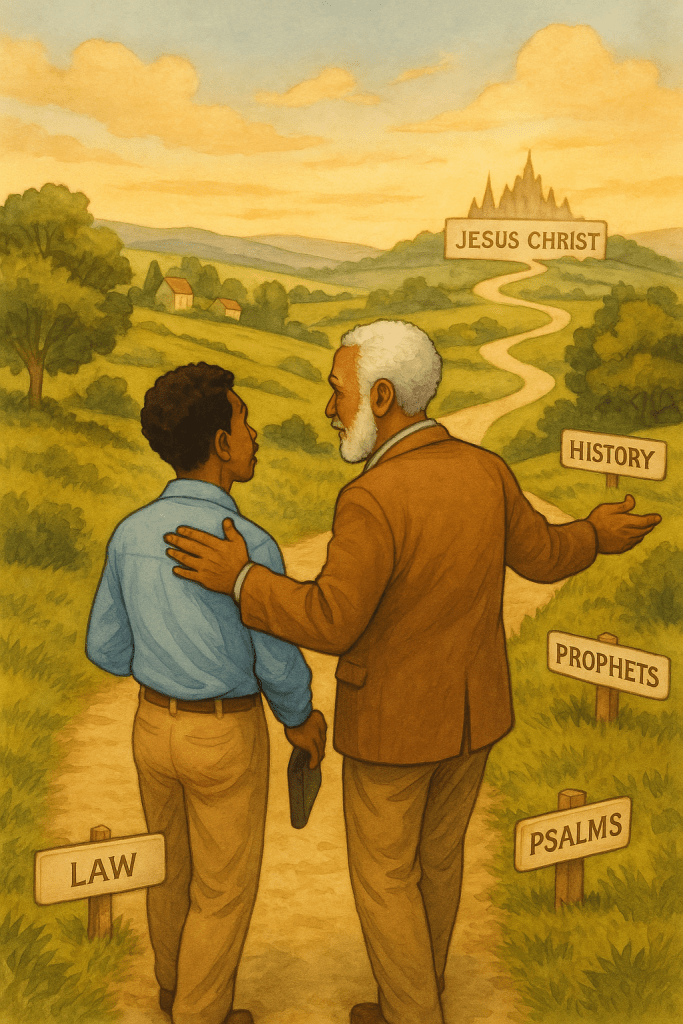
If the road seems hidden, look harder. If the road seems blocked, clear a path—go through hedge and ditch if you must—but get your listeners to Christ. Because a sermon may be clever, organized, and even accurate, yet it does no eternal good if it leaves people standing somewhere on the map without ever pointing them to the King.
The young teacher sat quietly, conviction settling in. He realized that solid study was vital, but the destination had to be Jesus—or the journey was incomplete.
This method is called Christological Hermeneutic
Christological comes from Christos (Greek for “Messiah, Christ”) + the ending -logical (“relating to”).
Hermeneutic comes from the Greek hermēneutikos—the art of interpretation
Put them together and you get Christ-centered interpretation—reading every part of Scripture with Jesus in view
it means we start by honoring the Old-Testament text in its own setting, but we finish by asking, “How does the New Testament—especially the life, death, and resurrection of Jesus—shine light on this passage?”
Example 1
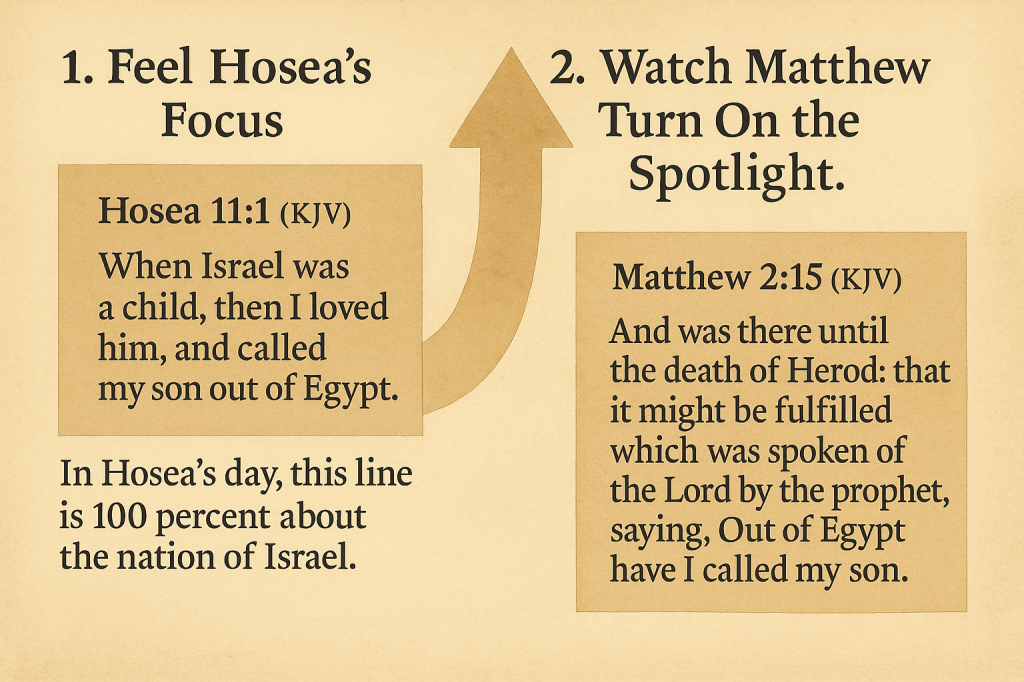
Hosea 11:1 (KJV)
1 When Israel was a child, then I loved him, and called my son out of Egypt.
In Hosea’s day, this line is 100 percent about the nation of Israel.
Hosea is looking back to the Exodus story (see Exodus 4:22-23, where God calls Israel “my firstborn son”)
The prophet’s point: “God loved you from the start, rescued you from Egypt—but look how quickly you wandered off.”
So the original readers would hear history and warning, not a Christ prophecy.
2. Watch Matthew Turn On the Spotlight.
Fast-forward to Matthew 2. Joseph, Mary, and the infant Jesus flee to Egypt. After Herod dies, they return, and Matthew writes:
Matthew 2:15 (KJV)
15 And was there until the death of Herod: that it might be fulfilled which was spoken of the Lord by the prophet, saying, Out of Egypt have I called my son.
Suddenly Hosea 11:1 is shining a second light. Matthew isn’t denying the original meaning; he’s saying, “There’s more here than you realized.” Israel’s rescue was a preview; Jesus’ return is the premier. The nation was the type—Christ is the true Son.
3. Why This Matters for Christological Reading
- Literal first: Hosea really was talking about Israel’s past.
- Christ next: The Holy Spirit, through Matthew, shows that Israel’s story is a pattern fulfilled in Jesus.
- No contradiction: The New Testament doesn’t cancel Hosea’s meaning; it completes it—like finishing the puzzle and seeing the hidden picture.
On first reading you see Israel’s journey; after meeting Jesus, you realize the sign was pointing to Him all along. That’s the heart of a Christological hermeneutic.
Example #2 – Genesis 28 : 10-13.
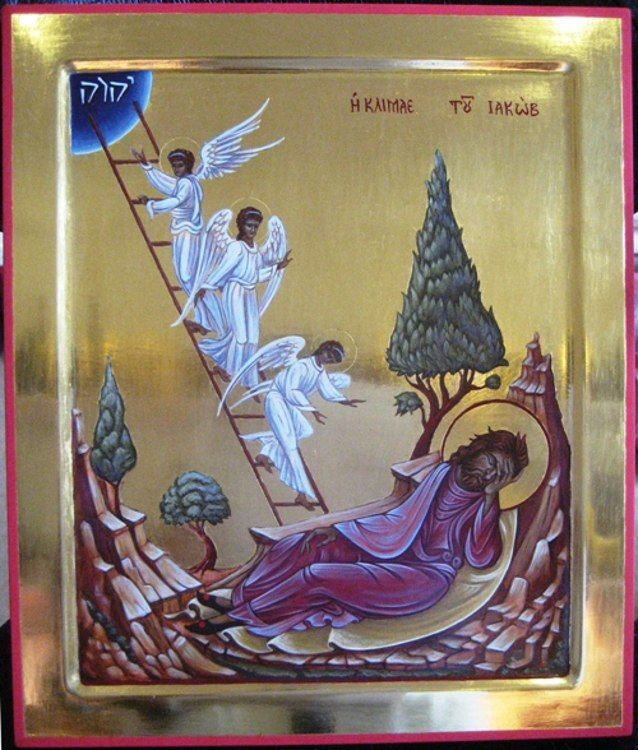
What’s this scene about on the surface?
Jacob is on the run from Esau. He leaves Beersheba, heads toward Haran, and—tired, alone, and flat-out on the ground—falls asleep (vv. 10-11). That night he has a vivid dream:
- A ladder (or staircase) stretches from earth up to heaven.
- Angels are traveling up and down on it.
- The LORD stands above (or beside) the ladder and reaffirms the covenant promises first given to Abraham and Isaac (v. 13).
If you stop there, it’s a powerful personal moment for Jacob: God is saying, “I’m with you, even in exile.
Now—let’s trace the road to the New Testament.
John 1:51 (KJV)
51 And he saith unto him, Verily, verily, I say unto you, Hereafter ye shall see heaven open, and the angels of God ascending and descending upon the Son of man.
Jesus identifies Himself as the true ladder— the bridge between God and humanity.
The ladder pictures the incarnation and mediation of Christ
Angels ascending & descending
Hebrews 1:14 (KJV)
14 Are they not all ministering spirits, sent forth to minister for them who shall be heirs of salvation?
Angels are God’s servants.
The verse calls them “ministering spirits”—heavenly helpers who work for God, not rivals to Him.
They’re sent on missions.
God (through Jesus) dispatches angels to carry out specific tasks.
Their job is to help believers.
Angels serve “those who will inherit salvation,” meaning Christians. They protect, guide, and encourage us until we reach our heavenly home.
Those same angels now move at Christ’s command, serving His church.
John 1:51 (KJV)
51 And he saith unto him, Verily, verily, I say unto you, Hereafter ye shall see heaven open, and the angels of God ascending and descending upon the Son of man.
Jesus says. “From now on you’re going to see heaven wide-open, with angels going up and down on Me, the Son of Man.”
He doubles the “Amen” (our “truly, truly”) to show He’s dead serious. He’s talking to all the disciples there. The picture He gives—angels moving on a staircase—comes straight from Jacob’s ladder. Jesus is telling them, “I’m the real bridge between God and people. Heaven is open, and everything God wants to do on earth will flow through Me.” Simple as that.
Spot the Curveball: What’s Off about Genesis 5:24?
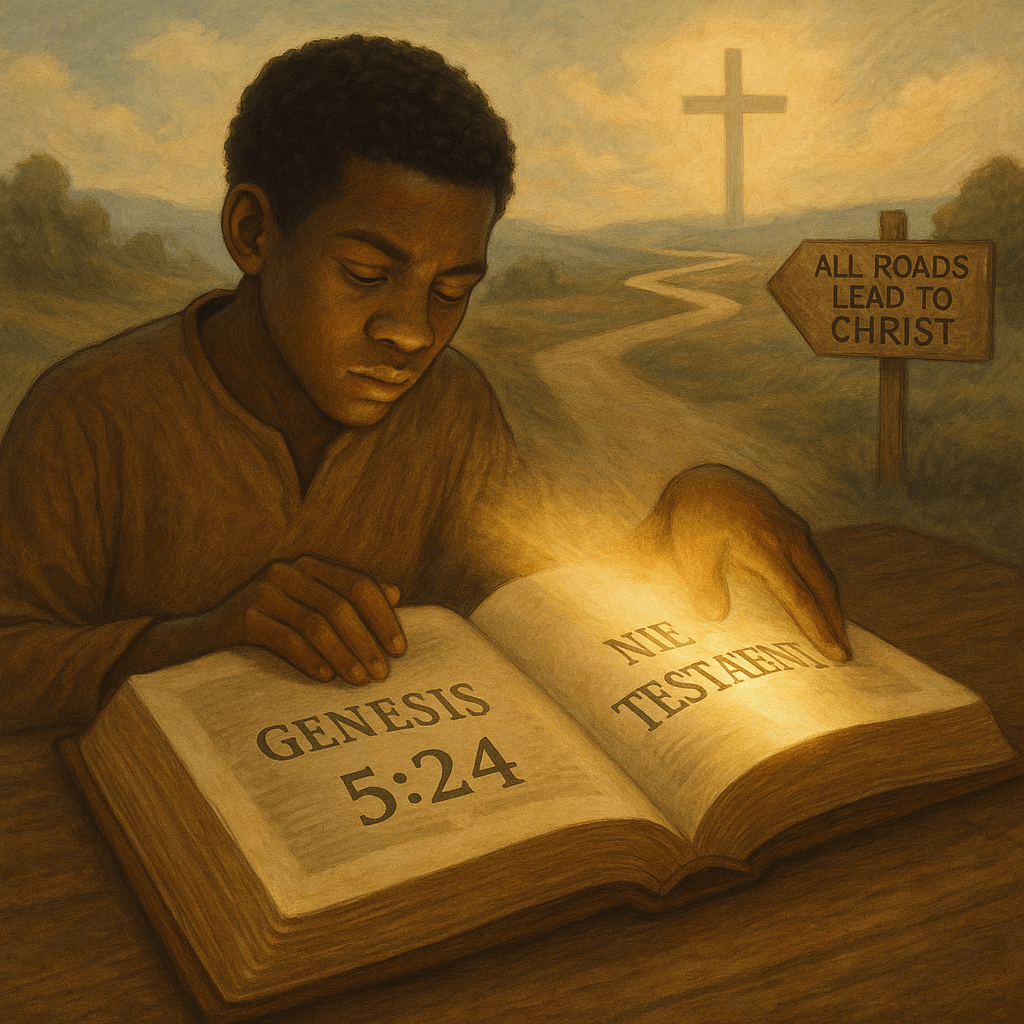
Can you see why this verse feels fishy?
Genesis 5:24 (KJV)
24 And Enoch walked with God: and he was not; for God took him.
When most people read Genesis 5:24—“Enoch walked with God, and he was not, for God took him”—they assume it means Enoch never tasted death. But if we read that line through the lens of the New Testament, a few red flags pop up:
Romans 5:14 (KJV)
14 Nevertheless death reigned from Adam to Moses, even over them that had not sinned after the similitude of Adam’s transgression, who is the figure of him that was to come.
Enoch falls squarely in that timeline. Paul’s point is that every mortal from Eden to Sinai was under the grip of death.
Whatever conclusion we draw from Genesis 5:24 has to harmonize with the New-Testament witness—because, as Romans 15:4 reminds us, “everything written in the past was written for our instruction.” The apostles learned directly from Christ, so their teaching sets the standard for how we read the earlier Scriptures.
Key takeaway: Read the Old Testament through the lens of the New. If an interpretation of Genesis (or any other passage) clashes with what Jesus and His apostles reveal, we need to rethink that interpretation.
(Stay tuned—I’ll post a separate deep-dive showing, from both Testaments, why Enoch and Elijah ultimately faced death and how their stories still point to Christ alone as the true conqueror of the grave.)
Wrapping It Up — How to Keep Your Sight on the Capital
Start literal. Read every Old-Testament passage in its own setting—people, place, purpose.
Look for the road. Ask, “How do Jesus and the apostles shed light on this?”
Check for alignment. If your first take on the OT contradicts the NT, reroute.
Finish at Christ. Let the gospel be the final lens; every text finds its ‘yes’ in Him.
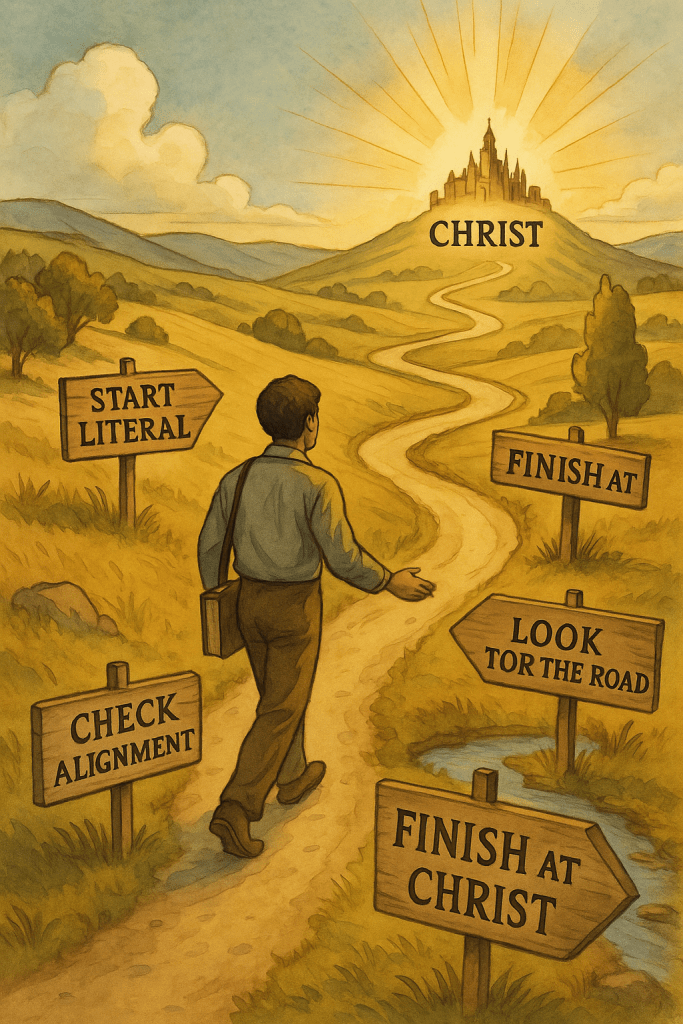
Challenge for the week
Pick an Old-Testament passage you love, trace its road to Christ using the steps above, and jot down what you see.
Shalom.

 The Bible Vault
3 comments