
Zechariah 11:1 — “Open your doors, Lebanon!”
Picture God shouting to the temple, “Throw the doors wide—let the flames in!” Back then everyone knew the temple beams were made from Lebanon’s famous cedar, so “Lebanon” became a nickname for the whole building.
Jewish storytellers even say the huge temple doors started creaking open on their own about forty years before Rome burned the place down. One rabbi supposedly yelled, “Stop scaring us, temple—you’re only proving Zechariah right!”
Bottom line? Verse 1 is God’s way of saying, “The old system is going up in smoke.” The cedar-lined sanctuary that once symbolized Israel’s special status is about to be dismantled, clearing space for something new.
Verse 2
Zechariah 11 : 2 (KJV)
Howl, fir tree; for the cedar is fallen; because all the mighty are spoiled: howl, O ye oaks of Bashan; for the forest of the vintage is come down.
Plain-talk breakdown
- “Howl, fir tree… cedar is fallen”
God calls lesser trees to wail because the tallest cedar has crashed. Translation: when the top leaders fall (kings, nobles, power-brokers), everyone lower on the ladder feels it. - “All the mighty are spoiled”
The rich and powerful—the folks who seemed untouchable—lose everything. Their wealth, their status, their safety: gone. - “Howl, oaks of Bashan”
Bashan was famous for strong oak forests. Here it’s a picture of provincial governors and regional powerholders. If the cedars (Jerusalem’s elites) are down, the distant oaks won’t stand either. - “The fortified forest has come down”
That “forest” is Jerusalem itself—once packed with people and ringed by walls. God says the whole thing will be leveled like a logged-out woodland.
Big idea
Verse 2 keeps the funeral song going: nothing of the old power structure—capital city, wealthy nobles, regional bosses—will survive the judgment that’s on the way. God is clearing the field so a new covenant can grow in its place.
Verse 3
Zechariah 11 : 3 (KJV)
A voice of the howling of the shepherds; for their glory is spoiled: a voice of the roaring of young lions; for the pride of Jordan is spoiled.
Straight-up breakdown
- “Howling shepherds”
The loud cries you hear are Israel’s leaders—both civic and religious—watching their power disappear. The people who once steered the nation now have nothing left to steer. - “Their glory is spoiled”
Titles gone. Cash flow gone. Pulpits and government seats—vacated. Everything that made these shepherds important has been stripped away. - “Roaring young lions”
Think of the younger nobles and up-and-coming officials. They used to act like untouchable predators; now they’re roaring in panic because their hunting ground has vanished. - “Pride of Jordan is spoiled”
Jordan’s thick riverbanks were famous for big cats hiding in the brush. If even that dense jungle is laid bare, the message is clear: the whole land is gutted.
Every level of leadership—from seasoned shepherds to roaring young “lions”—is brought to nothing. God is dismantling the old guard to make room for something entirely new.
Verse 4
Zechariah 11 : 4 (KJV)
“Thus saith the LORD my God; Feed the flock of the slaughter.”
What’s happening here?
Who’s actually being told to “feed”?
The Father is speaking—not to Zechariah, but to the coming Messiah. (That’s why the verse has the Messiah calling the LORD “my God,” the same language Jesus uses in John 20 : 17.)
“Feed the flock of slaughter” — who is that?
- The wider nation of Israel in Jesus’ day—headed for judgment because they’ll reject their Shepherd.
- A faithful remnant inside that crowd (later called “the poor of the flock,” v. 7) who will recognize His voice.
What does “feed” mean?
Not just hand out bread. In prophetic language it means “teach, guide, shepherd.” The Father sends the Son to pour out truth on people who are about to be mishandled and destroyed by their own leaders.
Why call them “flock of slaughter”?
- Their religious rulers are about to fleece and discard them (that’s verse 5).
- God has already scheduled national judgment because of long-running rebellion. So the flock is headed for slaughter—yet the Good Shepherd is still sent to care for them.
Verse 4 kicks off Christ’s assignment in this chapter: Go to a doomed flock, speak life, and gather the few who will truly listen. He agrees to do exactly that—feeding, protecting, and ultimately laying down His life for those sheep.
Verse 5
Zechariah 11 : 5 (KJV)
Whose possessors slay them, and hold themselves not guilty: and they that sell them say, Blessed be the LORD; for I am rich: and their own shepherds pity them not.
What’s happening in this verse?
First, note who’s talking.
This can’t be Zechariah describing his own ministry—he lived inside the very system God is about to tear down. The voice here is the Lord exposing what Israel’s leaders were doing centuries later, in Jesus’ day.
“Whose possessors slay them, and hold themselves not guilty”
- Possessors = the priests, scribes, and Pharisees who claimed ownership over the people’s spiritual lives.
- They weren’t murdering bodies; they were killing souls—pushing man-made rules, piling on guilt, yet convincing themselves God was pleased.
“They that sell them say, ‘Blessed be the LORD, for I am rich’”
- These leaders turned faith into a marketplace.
- They “sold” spiritual favor—think widows’ houses devoured, tithes abused, long showy prayers—then had the nerve to shout, “Praise God, look how He’s prospered us!”
“Their own shepherds pity them not”
- The very people assigned to guide and protect the flock showed zero compassion.
- Heavy burdens? Spiritual confusion? Not their problem—as long as the cash kept flowing.
Verse 5 spotlights the rotten core of Israel’s old-covenant leadership: spiritual trafficking dressed up as piety. God is exposing it so He can clear the stage for the true Shepherd—Christ—who will feed the flock instead of fleecing it.
Verse 6
Zechariah 11 : 6 (KJV)
“For I will no more pity the inhabitants of the land, saith the LORD: but, lo, I will deliver every man into his neighbour’s hand, and into the hand of his king; and they shall smite the land, and out of their hand I will not deliver them.”
- “I will no longer pity the people of the land.”
God draws a hard line. The season of mercy for national Israel is closing; judgment is now locked in. - “I will hand each person over to his neighbour.”
During Jerusalem’s final siege (A.D. 70) the city tore itself apart—zealot factions killing fellow Jews before Rome even breached the walls. God lets their own civil war devour them. - “And into the hand of his king.”
Israel had once shouted, “We have no king but Caesar” (John 19 : 15). Now God says, “Fine—into Caesar’s hand you go.” Vespasian and Titus become the instruments of that judgment. - “They will strike the land, and I will not rescue.”
Rome razes Judea. Unlike earlier times—Philistines, Ammonites, even Babylon—there’ll be no miraculous turnaround. This devastation sticks; Israel hasn’t recovered that national covenant standing for nearly two millennia.
The old covenant nation will face a final, unstoppable reckoning. No more reprieves, no last-minute deliverance. The stage is set for the new covenant Shepherd who offers personal salvation—but the national system as they knew it is about to be wiped off the map.
Verse 7
Zechariah 11 : 7 (KJV)
“And I will feed the flock of slaughter, even you, O poor of the flock. And I took unto me two staves; the one I called Beauty, and the other I called Bands; and I fed the flock.”
Natural-flow breakdown
“I will feed the flock of slaughter—yes, you poor of the flock”
- “Flock of slaughter” is the nation on a collision course with judgment.
- “Poor (Hebrew ʿanî) means afflicted, humble—the little remnant inside that doomed crowd who actually want God. Jesus zeroes in on these humble hearts first (cf. Matt 11 : 5).
Two shepherd’s staves
- Beauty(Hebrew noʿam — “pleasantness, favor”)
- Picture pure Gospel grace: forgiveness, healing, “good news to the poor.”
- Jesus wields this staff every time He teaches, heals, or says “Come to Me.”
- Bands(Hebrew ḥobhelîm — “bonds, ties”)
- Think of the simple Gospel ordinances—shared teaching, fellowship, the Lord’s Supper—that knit believers together.
- This staff keeps the flock united and heading the same direction.
“And I fed the flock”
- The Good Shepherd doesn’t just carry props—He feeds.
- He preaches truth.
- He protects from wolves.
- He gathers the weak and mends the broken.
- He appoints under-shepherds (the apostles) to keep the feeding going.
Even while the larger nation rushes toward disaster, Christ takes up two tools—Grace that refreshes and Bonds that hold us together—so the “poor of the flock” are well fed, safe, and united under the new covenant.
Verse 8
Zechariah 11 : 8 (KJV)
“Three shepherds also I cut off in one month; and my soul loathed them, and their soul also abhorred me.”
“Three shepherds … I cut off in one month”
- Who are the three shepherds?
Not literal individuals but the three power-groups that guided first-century Israel: priests, prophets, and princes (or civil rulers).- Priests—custodians of temple worship.
- Prophets—supposed spokesmen for God (scribes, teachers of the law).
- Princes—Herodian and Sanhedrin leaders who handled civil affairs.
- The priesthood ends when the temple burns.
- Prophecy is sealed; no more true voice rises from Israel.
- Jewish self-rule disappears under Rome.
“My soul loathed them”
- The Hebrew idiom is vivid: “My soul grew short toward them.”
God’s patience finally snaps because these leaders have turned worship into business, truth into tradition, and justice into hypocrisy (see Matthew 23 for Jesus’ own indictment).
“And their soul also abhorred Me”
- Rejection ran both ways. The priests, teachers, and rulers couldn’t stand Jesus—He exposed their scams (John 7 : 49; Matt 21 : 12-13).
- Their hatred climaxed at the cross and continued in persecution of the church.
The Good Shepherd pronounces the end of Israel’s old leadership structure. In one brief generation the sacrificial system, the prophetic voice, and national governance are all dismantled. The stage is cleared for a new covenant people led directly by Christ, the one true Shepherd.
Verse 9
Zechariah 11 : 9 (KJV)
“Then said I, I will not feed you: that that dieth, let it die; and that that is to be cut off, let it be cut off; and let the rest eat every one the flesh of another.”
1. “I will not feed you”
The speaker is still the Messiah. After years of patient ministry—first His own, then the apostles’—He finally pulls back.
- Historically: when the nation kept resisting the gospel, Paul announced, “We turn to the Gentiles” (Acts 13 : 46).
- Spiritually: God’s shepherding voice falls silent; there is no more fresh word, no more protective grace. Abandonment is itself a judgment.
2. “That which is dying—let it die”
- On the surface: many would indeed die, whether by plague, war, or sheer misery.
- At the deeper level: Christ lets those already dead in sin stay that way (John 8 : 24). If people reject the Bread of Life, He stops pressing the plate on them.
3. “That which is to be cut off—let it be cut off”
- Physically: thousands were “cut off” by Roman swords during the siege of Jerusalem.
- Spiritually: hearts already hardened are simply left to run their course (John 12 : 40; Rom 9 : 22). Once mercy is spurned, justice is allowed to finish the job.
4. “Let the rest eat each other’s flesh”
- Literal fulfilment: famine during the siege grew so extreme that cannibalism broke out—Josephus records the horror, echoing Lamentations 4 : 10.
- Figurative echo: even before Rome closed in, Jewish factions turned on one another; zealots, chief priests, and rival militias tore the nation apart from the inside (Gal 5 : 15).
Verse 10
Zechariah 11 : 10 (KJV)
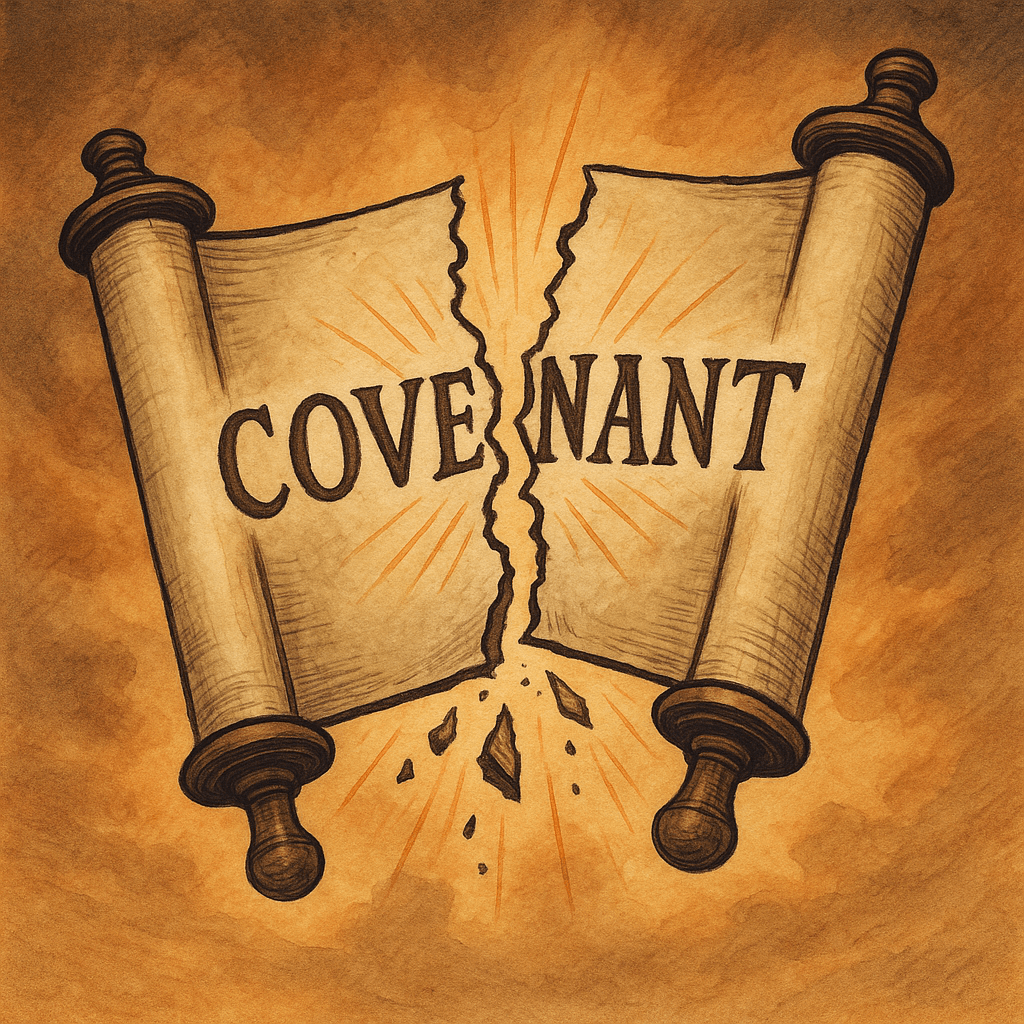
“And I took my staff, even Beauty, and cut it asunder, that I might break my covenant which I had made with all the people.”
A. “I took My staff—Beauty—and cut it in two”
Beauty = the Gospel staff
- Nicknamed Beauty (Heb. Noʿam, “pleasantness / favor”) because it carries nothing but grace—pardon, peace, righteousness, and eternal life.
- Through it Israel had been led, protected, and fed; through it the true loveliness of Messiah and the order of God’s house were displayed (Isa 52 : 7; Rom 10 : 15).
Cutting Beauty in half
- Christ doesn’t destroy the Gospel’s power; He withdraws it from the nation that keeps rejecting it.
- Same move He announced in Matthew 21 : 43: “The kingdom of God shall be taken from you and given to a nation bringing forth the fruits thereof.”
- Historically that shift shows up when Paul turns to the Gentiles (Acts 13 : 46).
“That I might break My covenant which I had made with all the people”
- This is not the everlasting covenant of grace (that one can’t be broken) Ezekiel 16: 59-63
- It’s the Mosaic, Sinai covenant—a national agreement sealed with sacrifice and conditioned on obedience.
- Hebrews 8 : 13 calls it “ready to vanish away.”
- Colossians 2 : 14 says its legal bond was nailed to the cross.
Breaking the covenant means:
- The old, law-based administration is finished.
- The special hedge around temple, priesthood, and land is removed.
- Judgment falls—culminating in A.D. 70 when the temple goes up in flames.
When Israel spurned the Gospel staff called Beauty, God snapped that staff in two and formally ended the covenant system that had guarded the nation since Sinai. The grace once centered in Jerusalem now flows out to the world, where Jew and Gentile alike are invited to come under the new—and unbreakable—covenant in Christ.
Verse 11
Zechariah 11 : 11 (KJV)
“And it was broken in that day: and so the poor of the flock that waited upon me knew that it was the word of the LORD.”
A. “It was broken in that day”
- “It” = the staff Beauty—the visible symbol of God’s gospel favor and the Mosaic covenant (see v. 10).
- “That day” unfolds on two levels:
- Legally—the very moment Christ died, the old covenant expired (Heb 9 : 15-17).
- Historically—A.D. 70, when Rome leveled Jerusalem and the temple, making the judgment unmistakable.
B. “The poor of the flock”
- The same humble remnant mentioned in v. 7:
- Poor in spirit (Matt 5 : 3)
- Despised by the religious elite, yet chosen by grace (Rom 11 : 5-7).
C. “That waited upon Me”
- Hebrew sense: those who kept watch—attentive servants.
- They hung on Christ’s words, trusted His promises, and kept serving even while the nation veered off.
D. “Knew that it was the word of the LORD”
- When they saw the covenant staff snapped and judgment begin, it clicked:
- Everything Jesus warned about is happening. This isn’t chance—God Himself is acting.
- In that recognition they also saw the Word made flesh (John 1 : 1) proving yet again that His word never fails.
Verse 12
Zechariah 11 : 12 (KJV)
“And I said unto them, If ye think good, give me my price; and if not, forbear. So they weighed for my price thirty pieces of silver.”
1. “If ye think good…give me my price”
The voice here is the Messiah speaking to the unbelieving leaders of Israel, not to the humble remnant.
- He is saying in effect, “If you see any worth in Me, name it. If not, keep your money.”
- It is a gentle test of their hearts: will they acknowledge His true value with faith and love, or will they shrug Him off?
2. “If not, forbear”
Christ isn’t bargaining for honor. He simply lays the choice before them—either esteem Him rightly or walk away.
(Compare Ezek 2 : 5: even a stubborn house “shall know that a prophet hath been among them.”)
3. “They weighed…thirty pieces of silver”
They do put a price on Him—but the lowest possible:
- Under Exodus 21 : 32, thirty shekels was the compensation for a gored household slave.
- By offering that sum, Israel’s rulers valued their promised King as no more than a common servant.
Literal fulfilment follows with chilling precision:
- Matthew 26 : 15 – Judas agrees to betray Jesus for exactly thirty silver pieces.
- Matthew 27 : 9-10 – Matthew cites this very verse when the money is flung back into the temple.
Verse 13
Zechariah 11 : 13 (KJV)
“And the Lord said unto me, Cast it unto the potter: a goodly price that I was prised at of them. And I took the thirty pieces of silver, and cast them to the potter in the house of the Lord.”
1. “The Lord said unto me…”
In the vision the prophet is playing the part of the rejected Shepherd—ultimately a picture of Christ.
God now tells him what to do with the insultingly small “wages” Israel has just paid.
2. “Cast it unto the potter”
- Literal fulfilment – Matthew 27 : 5-7.
Judas flings the coins into the temple; the priests use them to buy “the potter’s field.” - Meaning – a field already dug over for clay, useless for crops, only good for burial ground.
Perfect symbol of how little value the nation placed on its own Messiah.
3. “A goodly price…!”
Thirty shekels was the compensation for a gored household slave (Ex 21 : 32).
That is exactly what they thought Jesus was worth—slave money.
4. “I…cast them to the potter in the house of the Lord”
Everything happened inside the very temple that should have honoured God:
- Judas drops the coins on the floor of the sanctuary.
- The chief-priests gather them up but refuse to put “blood money” back into the treasury.
- They hand it over for a potter’s field—so the coins still end up earmarked for temple business, just as Zechariah foresaw.
Verse 14
Zechariah 11 : 14 (KJV)
“Then I cut asunder mine other staff, even Bands, that I might break the brotherhood between Judah and Israel.”
Cutting the second staff
In the vision, the first staff (Beauty) represented God’s gracious offer of the Gospel. Breaking that staff showed the Gospel being withdrawn from a stubborn nation (vv. 10-11).
The second staff stands for the ties that once held the nation together. When Christ breaks Bands, He is announcing that those cords of unity are finished.
What “Bands” stood for
- Spiritual cohesion – Temple worship, Sabbath gatherings, the common life that flowed from Moses’ law.
- National solidarity – Judah and the other tribes still thought of themselves as one people under God.
Once the staff is snapped, both forms of unity unravel. Historically that is exactly what happened:
- In 70 A.D. the believers fled Jerusalem (Eusebius records they went to Pella); the unbelieving factions inside the city turned on one another even before Rome breached the walls.
- After the siege, tribal records were lost, the Sanhedrin dissolved, and the people were scattered across the world. The “brotherhood” was gone.
A solemn judgment
The flock had just valued their Shepherd at thirty pieces of silver (vv. 12-13)—the price of a common slave. Now the Shepherd responds: If you will not have Me, you will not have My protection either.
The verse echoes Jesus’ lament in Matthew 23 : 37-38: “Your house is left unto you desolate.” When a people despise the Good Shepherd, they are left to the wolves—and even the bonds that tie them to one another begin to snap.
Prophetic significance
- Immediate fulfilment – The civil and religious collapse that led to Jerusalem’s destruction in 70 A.D.
- Ongoing lesson – True unity for Jew and Gentile is now found only “in Christ” (Eph 2 : 14-16). Outside of Him, the staff of Bands is already broken.
Verse 15
Zechariah 11 : 15 (KJV)
“And the LORD said unto me, Take unto thee yet the instruments of a foolish shepherd.”
What happens in the verse
The LORD gives Zechariah a second, very strange assignment. The prophet is told to pick up “the instruments”—the gear—of a foolish shepherd. In other words, Zechariah must dress the part: grab a shepherd’s cloak, staff, and feed-bag, then act out the role of a worthless hireling.
Why act it out?
Prophets often preached with object-lessons (Jeremiah’s yoke, Ezekiel’s clay tablet). Here, God wants the people to see what kind of leaders they will have after they reject the true Shepherd (Christ).
- Foolish doesn’t mean simpleminded; it means godless, self-serving, careless.
- The “instruments” symbolize everything a shepherd needs—but in the hands of a fool they bec
- ome tools of neglect and abuse.
The next verses will spell out how that foolish shepherd behaves—and how God ultimately judges him.
Verse 16
Zechariah 11 : 16 (KJV)
“For, lo, I will raise up a shepherd in the land, which shall not visit those that be cut off, neither shall seek the young one, nor heal that that is broken, nor feed that that standeth still: but he shall eat the flesh of the fat, and tear their claws in pieces.”
What God is saying
After Judah has scorned the Good Shepherd and the two staffs have been snapped (vv. 10–14).
“Since you won’t have My care, I’ll raise up another kind of shepherd—one you deserve.”
This new leader is everything a real shepherd should never be.
Four things he won’t do
- “Visit those that be cut off.”
He never checks on sheep that wander or hover near death. - “Seek the young one.”
The weak and inexperienced get no guidance, no protection. - “Heal that which is broken.”
Wounded consciences, broken hearts—left to bleed. - “Feed that that standeth still.”
Even the exhausted who stand right in front of him get no food.
In short, he abandons the very duties Christ delighted in (Luke 4:18; John 10:11).
But one thing he will do
“Eat the flesh of the fat, and tear their claws in pieces.”
He lives off the flock—exploits the healthy, strips them bare, then rends even their “claws” (strength, rights, freedoms) so they can’t escape.
Who is this “foolish shepherd”?
- First century shadow: corrupt priests and zealot leaders who ruined Jerusalem.
- Long-view fulfillment: the counterfeit shepherd Paul calls “the man of sin” (2 Thess. 2:3-4)—Antichrist in whatever robe or miter he wears.
Pretends to be Christ’s vicar, yet lives on indulgences, edicts, and fear.
God “raises” him—not to bless, but to judge. A people who despise truth will get leaders who despise them.
Verse 17
Zechariah 11 : 17 (KJV)
“Woe to the idol shepherd that leaveth the flock! the sword shall be upon his arm, and upon his right eye: his arm shall be clean dried up, and his right eye shall be utterly darkened.”
- “Idol shepherd”
Hebrew: ro‘eh ha’elil —literally “shepherd of nothingness.”- He looks like a leader but is spiritually worthless (cf. Job 13 : 4, “physicians of no value”).
- Jesus sketches the same character in John 10 : 12—the hireling who deserts the sheep.
- “That leaveth the flock”
- His greatest crime is abandonment.
- While the Good Shepherd lays down His life, this man walks away when the wolves circle.
- “The sword shall be upon his arm … and upon his right eye”
- Sword is a Bible shorthand for God’s judgment.
- Arm withered → his strength, influence, and political clout vanish.
- Right eye darkened → the “eye” that claimed insight is struck blind.
- Complete ruin
- Not a temporary setback—his arm is clean dried up, his eye utterly dark.
- Power gone, vision gone, usefulness gone.
Summary
- Israel’s leaders were fleecing the sheep, not feeding them.
- God said, “Fine—I’ll send My Shepherd.” That’s the Messiah.
- The nation would insult Him with a slave’s price (thirty silver coins).
- After that, God snaps the old covenant staffs and rolls out covenant-of-grace terms instead.
Even the Hebrew prophets knew it: a new Shepherd and a new covenant were coming—because the old system (and its shepherds) had failed.

 The Bible Vault