
This article is a follow-up to the study we just did showing that a genealogy can indeed be traced through the mother. Now we’re going to take the next step and show that Mary herself was from the line of David, from the tribe of Judah.
This matters because one of the biggest arguments people use against the virgin birth is the claim that Mary wasn’t from Judah at all, but from the tribe of Levi. If that were true, Jesus couldn’t fulfill the prophecy of being the seed of David. But as we’ll see, the Scriptures make it clear—Mary was from Judah, a descendant of David—and through her, Christ fits the promise perfectly.
Where do they get that from? It comes from the connection between Mary and Elizabeth.
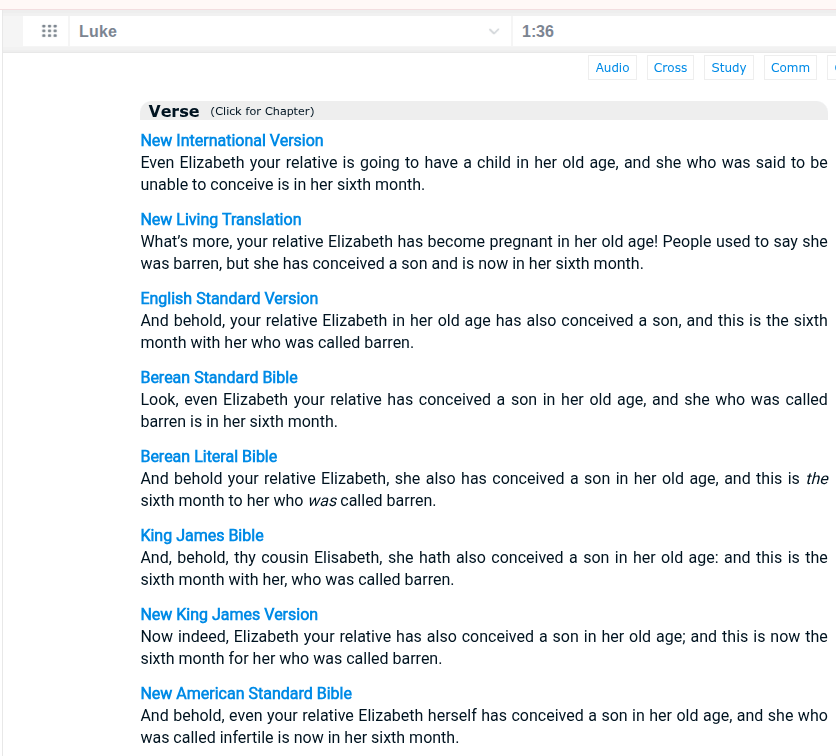
Luke 1:36 says:
“And, behold, thy cousin Elisabeth, she hath also conceived a son in her old age: and this is the sixth month with her, who was called barren.”
So Mary and Elizabeth are called “cousins.”
Now look at who Elizabeth was:
Luke 1:5 says:
“There was in the days of Herod, the king of Judaea, a certain priest named Zacharias, of the course of Abia: and his wife was of the daughters of Aaron, and her name was Elisabeth.”
This shows Elizabeth was from the tribe of Levi ( Aaron was from the tribe of Levi) , since she was a descendant of Aaron and married to a priest.
That’s why some people assume Mary must also be Levi—because they were cousins. But as we’ll see, that’s a misunderstanding. Being cousins doesn’t mean they had to be from the same tribe. Families often crossed over through marriage, and “cousin” in the Bible could also mean a broader kinship, not just immediate bloodline.
Clearing the Confusion About Mary and Elizabeth
Understanding “Cousin” in Luke 1
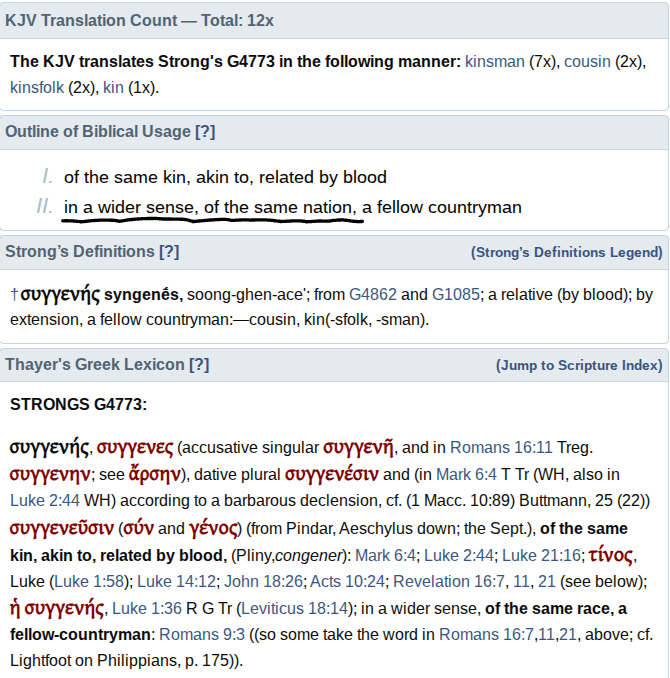
The first thing to understand is this: when Luke 1 says Mary and Elizabeth were cousins (KJV), that word didn’t mean the same thing it does today.
Back then, the Greek word used means “kinswoman”—someone of the same kin, related by blood, or even just from the same nation. It didn’t always mean a direct cousin like we think in modern English.
Why Mary and Elizabeth Were Called Cousins
Elizabeth was from the tribe of Levi (Luke 1:5).
Mary was from the tribe of Judah.
How are they cousins then? Because Judah and Levi were brothers, both sons of Jacob. That means their descendants are still family, even if they’re from different tribes.
So Mary and Elizabeth could rightly be called “cousins” or kinswomen without being from the same tribe.
The word “cousin” really means kinswoman— just a female relative. It doesn’t prove they were from the same tribe.
Example
Think about it like this: suppose two sisters—one moves to America and her children grow up American. The other moves to Haiti and her children grow up Haitian.
Even though the kids belong to different nations, they’re still cousins because their mothers were sisters.
Same with Mary and Elizabeth: different tribes, still family.
Luke 2:23 — Mary Keeping the Law of the Firstborn
Luk 2:23-24
23 (as it is written in the Law of the Lord, “Every male who first opens the womb shall be called holy to the Lord”)
24 and to offer a sacrifice according to what is said in the Law of the Lord, “a pair of turtledoves, or two young pigeons.”
This law comes from Exodus 13:2, 12 → when God killed the firstborn of Egypt, He claimed the firstborn of Israel as His own.
So every firstborn son had to be presented to the Lord and then redeemed (bought back) with a payment of five shekels.
Meaning: The firstborn belonged to God, so parents had to recognize that by making the offering.
The Levite Exemption
Now here’s the key point: the tribe of Levi was exempt from this law. God chose the Levites as His portion instead of taking every firstborn.
Numbers 3:12-13
12 “Behold, I have taken the Levites from among the people of Israel instead of every firstborn who opens the womb among the people of Israel. The Levites shall be mine,
13 for all the firstborn are mine. On the day that I struck down all the firstborn in the land of Egypt, I consecrated for my own all the firstborn in Israel, both of man and of beast. They shall be mine: I am the LORD.”
Meaning: if you were a Levite, you didn’t have to redeem or present your firstborn this way—the Levites themselves were already dedicated to God on behalf of Israel.
What This Proves About Mary
So when Mary went to the temple in Luke 2 and kept the law of presenting Jesus as her firstborn, it shows something important:
If Mary were from Levi, she would not have been under this law. But she did keep it, which proves she wasn’t from the tribe of Levi.
Nail in the Coffin: The Two Lines of David
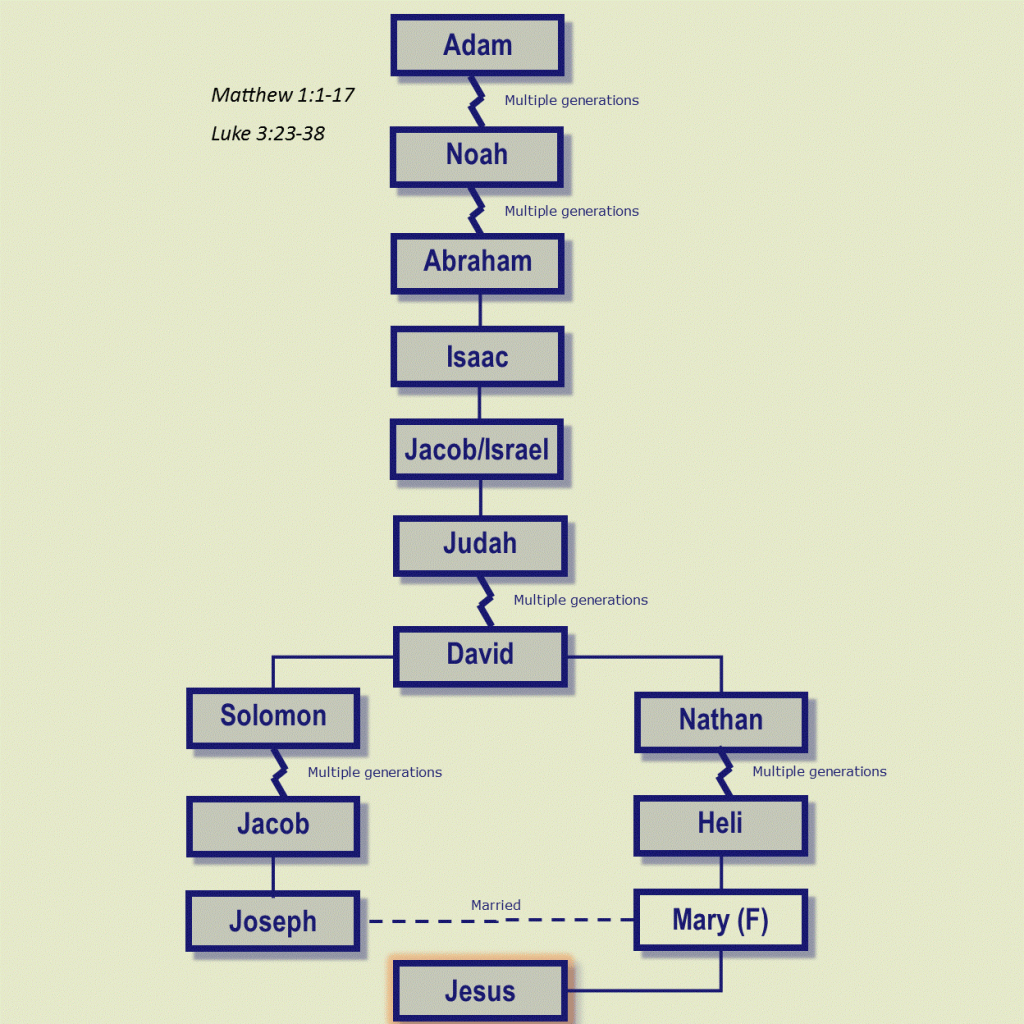
Here’s the final proof that ties everything together.
1) David’s Two Sons
David had many children, but two matter here:
- Solomon (through whom Joseph’s line is traced)
- Nathan (through whom Mary’s line is traced)
These are two brothers, both sons of David.
2) Joseph’s Line – Through Solomon
Matthew 1 traces Joseph’s family line through Solomon.
Matthew 1:6, 16
6 “And Jesse begat David the king; and David the king begat Solomon of her that had been the wife of Urias.”
16 “And Jacob begat Joseph the husband of Mary, of whom was born Jesus, who is called Christ.”
Notice the word “begat.” That means direct descent. Matthew is clear—Joseph came through Solomon’s branch of David’s family.
Mary’s Line – Through Nathan
But when you turn to Luke 3, you’ll notice something different.
Luke 3:23, 31
23 “And Jesus himself began to be about thirty years of age, being (as was supposed) the son of Joseph, which was the son of Heli.”
31 “…which was the son of Melea, which was the son of Menan, which was the son of Mattatha, which was the son of Nathan, which was the son of David.”
Here’s the difference:
- Luke doesn’t trace Joseph through Solomon, but through Nathan—David’s other son.
- But wait—Joseph can’t have two fathers. In Matthew, his father is Jacob, but in Luke, it says Heli.
Son-in-Law, Not Literal Son
This is the key: Luke is not saying Joseph was literally begotten by Heli. We already know from Matthew that Jacob begat Joseph.
What Luke is doing is giving Mary’s genealogy. Since Joseph was married to Mary, he’s called the “son of Heli” (Mary’s father), in the sense of son-in-law.
This was a normal way of speaking in Israelite genealogies—where a man is listed under his wife’s father when tracing her line.
So:
- Matthew = Joseph’s line, through Solomon.
- Luke = Mary’s line, through Nathan.
5) Why This Matters
This solves everything. Jesus is legally tied to David’s throne through Joseph (via Solomon), and He’s biologically tied to David through Mary (via Nathan).
Either way, He is truly the seed of David, fulfilling the prophecy perfectly.
Answering the Critics: “Adding to the Text?”
One of the most common objections goes like this:
“You’re adding to the text! The Bible never says ‘son-in-law’ or ‘father-in-law.’ It just says ‘son.’”
Alright, let’s test that logic. If the Bible must always spell out “in-law,” then we should never see cases where someone is called a “father” without being the literal dad. But guess what? We do.
Example: Belshazzar and Nebuchadnezzar
History tells us Belshazzar’s real father was Nabonidus, not Nebuchadnezzar. That’s a fact.
But in the book of Daniel, we read:
Daniel 5:2 (KJV)
“Belshazzar, whiles he tasted the wine, commanded to bring the golden and silver vessels which his father Nebuchadnezzar had taken out of the temple which was in Jerusalem…”
Some people sees this and say , “See? The Bible got history wrong.”
But here’s the truth: Belshazzar wasn’t Nebuchadnezzar’s literal son—he was his son-in-law. Belshazzar married Nebuchadnezzar’s daughter. That made Nebuchadnezzar his father-in-law, and in the biblical way of speaking, that was enough to just call him “father.”
You can look this up to fact check.
In Scripture, whether it’s literal father or father-in-law, the word “father” is used the same way.
Why This Matters
This is the exact same principle with Joseph in Luke 3.
- The text doesn’t say “son-in-law” because Hebrew/Greek genealogies didn’t need to spell it out.
- Just like Belshazzar is called Nebuchadnezzar’s son, Joseph is called Heli’s son. In both cases, it’s about the family relationship—not about direct blood.
So no, we’re not “adding to the text.” We’re reading it the way the Bible itself consistently uses these terms.
Summary:
We proved Mary was not from Levi, because she kept the firstborn law that Levites were exempt from (Luke 2:23, Exo 13:2). We showed that if Luke 3 were Joseph’s genealogy, he would have two different fathers—impossible. We also cleared up why Mary and Elizabeth are called cousins: Judah and Levi were brothers, so their descendants were naturally kin. All this confirms Mary was from Judah and a true descendant of David, fulfilling the prophecy. Jesus is from the house of David through his mother Mary.

 The Bible Vault