
Luk 1:6
6 And they were both righteous before God, walking in all the commandments and ordinances of the Lord blameless.
When people read Luke 1:6, they see that Zechariah and Elizabeth were “both righteous before God, walking in all the commandments and ordinances of the Lord blameless.”
Some Israelites take that and say, “See? They kept all the laws perfectly. That proves we can be sinless too.”
But that’s not what this verse is teaching.
The word “blameless” doesn’t mean they never sinned — it means they weren’t held guilty for their sins. They walked faithfully under the covenant God gave them. And when they did fall short, they made the proper sacrifices and atonements as the law required. Because of that, God didn’t charge their sins against them.
So this verse isn’t proof that anyone can live perfectly without sin — it’s proof that even the most righteous people still needed mercy and atonement.
In this breakdown, we’ll look at what “righteous before God” and “blameless” really mean in Luke 1:6
Sinless vs. Blameless — Two Different Words
Before we even touch Luke 1:6, we have to understand something simple — “sinless” and “blameless” are not the same thing in the Bible.
Let’s look at the Greek words used for each one:
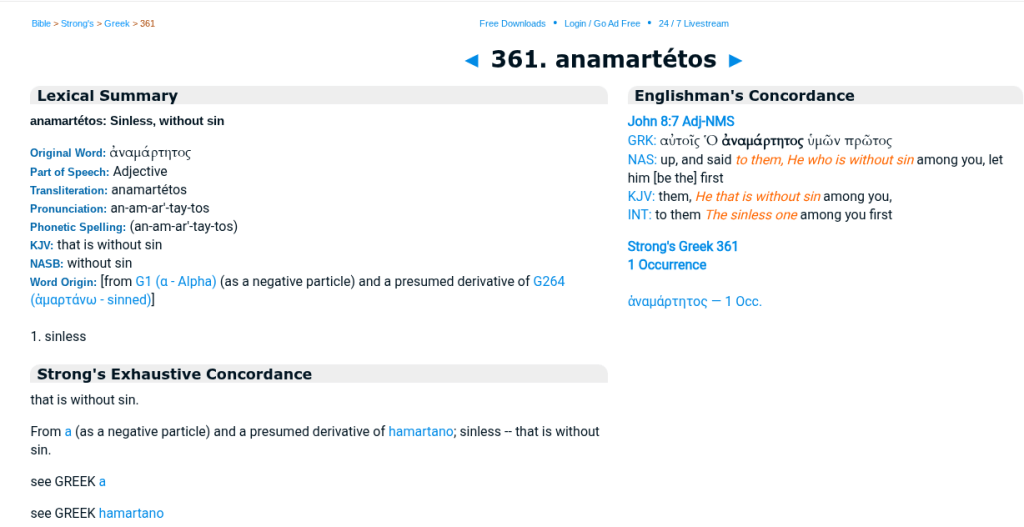
1. Sinless — Strong’s G361 (anamártētos)
This word only appears once in Scripture — John 8:7:
He that is without sin among you, let him first cast a stone at her.”
The Greek word here is ἀναμάρτητος (anamártētos), which literally means “without sin” — completely sinless, never having sinned at all. This is the word used to describe perfect purity something that only applies to Christ.
Blameless — Strong’s G273 (amémptos)
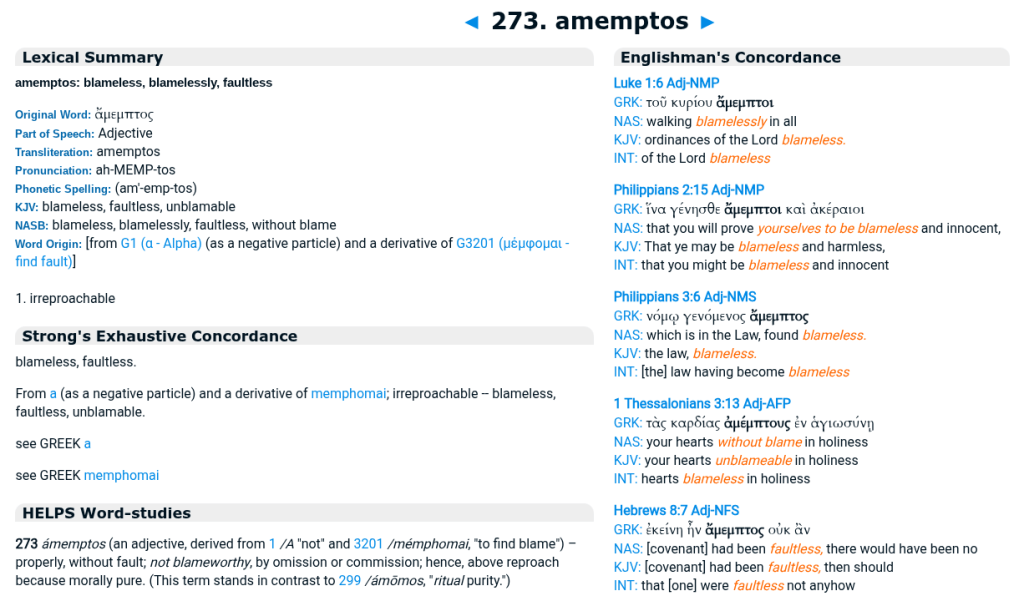
Now compare that to the word in Luke 1:6, where Zechariah and Elizabeth are called “blameless.”
The Greek word is ἄμεμπτος (amémptos) — meaning “without fault,” “irreproachable,” or “not chargeable.”
This doesn’t mean they never sinned — it means there was nothing held against them. They were faithful under the covenant, and when they sinned, they made the right atonements. Their record was clear before God because their sins were covered, not because they were perfect.
So when the Bible calls them “blameless,” it’s not calling them sinless.
It’s saying their walk was righteous and their relationship with God was right not that they lived without ever failing.
Proof they took were guilty of sin
Now that we see “blameless” doesn’t mean “sinless,” let’s prove from Scripture that no one born of man has ever lived completely without sin.
Romans 5:12
Wherefore, as by one man sin entered into the world, and death by sin; and so death passed upon all men, for that all have sinned.”
This verse makes it plain sin entered through Adam, and it spread to everyone.
That means Zechariah and Elizabeth, just like the rest of us, were part of fallen humanity. They inherited that same sinful nature.
1 John 1:10
If we say that we have not sinned, we make him a liar, and his word is not in us.”
John doesn’t leave room for exceptions.
If anyone claims to be sinless, they’re calling God a liar — because His Word says otherwise.
So calling Zechariah and Elizabeth “sinless” goes directly against Scripture.
Proverbs 20:9
Who can say, I have made my heart clean, I am pure from my sin?”
That’s a rhetorical question — and the answer is no one.
Even the most righteous person under the law still needed cleansing and atonement.
So while Zechariah and Elizabeth were faithful and upright, they weren’t sinless.
They were righteous because they believed God and followed His commandments faithfully — and when they fell short, they made the necessary atonement, just as the law required.
That’s why God could call them “blameless.”
Luke 1:6 — “And they were both righteous before God…”
When Luke says Zechariah and Elizabeth were “righteous before God,” he’s not saying they were perfect or sinless like Christ.
He’s saying they were genuinely righteous in God’s sight — not like the Pharisees who only appeared righteous in front of people.
Their righteousness didn’t come from perfectly keeping the law, because no one can be justified by the law.
As Paul said in
Acts 15:11, “We believe that through the grace of the Lord Jesus Christ we shall be saved, even as they.”
In other words, even before Christ’s death, God saw the faithful as righteous through the righteousness of Christ that was to come.
Zechariah and Elizabeth believed God, obeyed Him sincerely, and trusted in the promises that pointed toward the Messiah — and that’s why they were called righteous.
They were covered by the future work of Christ, just like we are covered by His finished work now.
Their faith, obedience, and sincerity before God made their walk pleasing to Him, even though it wasn’t perfect.
So being “righteous before God” means they walked uprightly and sincerely in faith — not without sin, but without hypocrisy.
“Walking in all the commandments and ordinances of the Lord…”
This part shows how Zechariah and Elizabeth lived — not why they were righteous.
Their obedience to God’s commandments didn’t make them righteous before Him; it was the evidence that they already were.
The “commandments” refer to the moral laws — loving God, loving their neighbor, living honestly, showing mercy, and keeping a clean heart before God.
The “ordinances” refer to the ceremonial laws — the sacrifices, rituals, and temple duties that were still in place before Christ fulfilled them.
Those things didn’t save anyone, but obeying them showed their faith and respect for God’s Word.
When Luke says they “walked” in these things, it means they didn’t just agree with them — they lived by them daily.
They were consistent, sincere, and steady in their obedience.
They took pleasure in following what God had commanded, not out of fear, but out of love.
So this verse is not saying they earned righteousness by keeping the law.
It’s saying their faithful obedience proved they belonged to God and trusted in His promises.
“…and were blameless.”
Now here’s where some people get confused.
When Luke says Zechariah and Elizabeth were “blameless,” it doesn’t mean they were sinless.
Nobody is without sin — not even them.
In fact, later in this same chapter, Zechariah doubted the angel’s words and was struck dumb (Luke 1:20).
That alone shows he wasn’t perfect.
Luk 1:20 (KJV)
20 And, behold, thou shalt be dumb, and not able to speak, until the day that these things shall be performed, because thou believest not my words, which shall be fulfilled in their season.
Rom 14:23
23 And he that doubteth is damned if he eat, because he eateth not of faith: for whatsoever is not of faith is sin.
Before people, they also carried themselves with integrity.
They didn’t live in open sin or neglect God’s commands.
Even though they weren’t perfect, they were serious about their walk — humble, obedient, and quick to make things right when they fell short.
That’s why Scripture calls them blameless.
Not because they never sinned, but because no one could justly accuse them of living in rebellion against God.
Their faith and obedience made their life a consistent witness — not a sinless one.

 The Bible Vault