
There’s a lot of confusion around Matthew 5:17–20.
People argue:
- Did Christ abolish the Law?
- Is the Mosaic Law still binding?
- Has heaven and earth passed away?
- What does “fulfill” actually mean?
Some teach the Law is still fully binding.
Others say Christ abolished it.
Both sides sometimes explain it poorly.
So let’s read the text.
Matthew 5:17
Think not that I am come to destroy the law, or the prophets: I am not come to destroy, but to fulfill.”
Christ says clearly:
He did not come to destroy the Law or the Prophets.
So we cannot say He destroyed them.
But He did say He came to fulfill them.
So the real question is simple:
What does “fulfill” mean?
The word means:
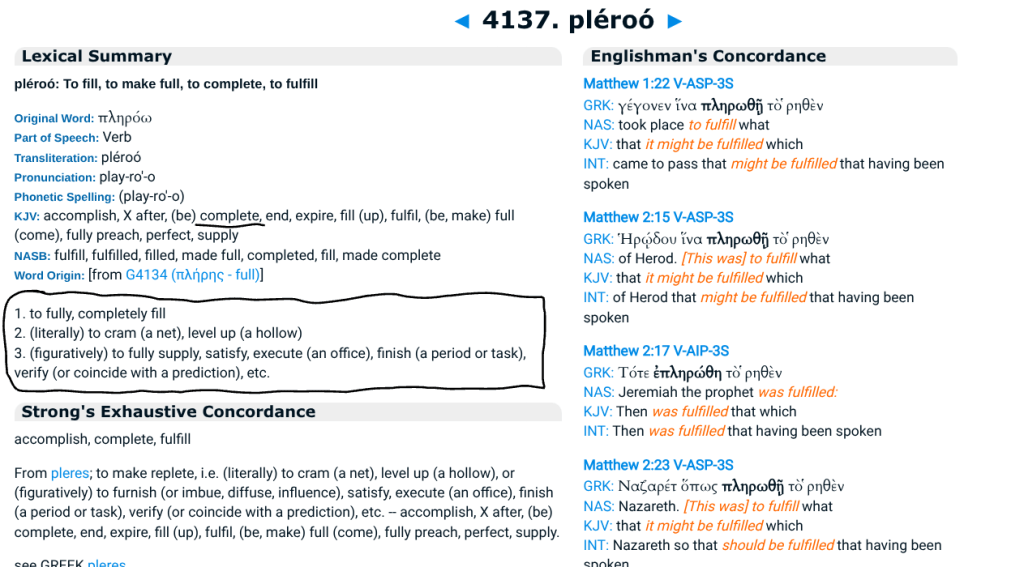
To complete.
To finish.
To accomplish what was required.
If you hire someone to wash 10 dishes and they wash all 10 — they fulfilled the agreement.
If they stop at 8 — they didn’t.
So fulfilling something means completing the assignment.
Now the question becomes:
How did Christ fulfill the Law and the Prophets?
Let’s start with the Prophets first.
How he fulfilled the prophets.
You’re right. That “let’s go to…” sounds like video talk, not article writing. And yeah—if it’s a website post, the verse needs to be there in full (KJV), not just a reference.
Here’s the corrected version, tight, readable, with the full KJV text included.
How Christ Fulfilled the Prophets
Luke 24:44–46
44 And he said unto them, These are the words which I spake unto you, while I was yet with you, that all things must be fulfilled, which were written in the law of Moses, and in the prophets, and in the psalms, concerning me.
45 Then opened he their understanding, that they might understand the scriptures,
46 And said unto them, Thus it is written, and thus it behoved Christ to suffer, and to rise from the dead the third day:
This shows what “fulfilled” means in context.
Christ fulfilled the prophets by completing what was written about Him:
- He would suffer
- He would die
- He would rise again the third day
That’s the fulfillment.
And notice something important:
When Scripture talks about Him fulfilling “the prophets,” it’s not claiming every single prophecy in the Old Testament was completed at that moment.
It’s talking about the prophecies concerning His suffering and resurrection—like Isaiah 53, Psalm 16, and Psalm 22.
Luke 18:31–33
31 Then he took unto him the twelve, and said unto them, Behold, we go up to Jerusalem, and all things that are written by the prophets concerning the Son of man shall be accomplished.
32 For he shall be delivered unto the Gentiles, and shall be mocked, and spitefully entreated, and spitted on:
33 And they shall scourge him, and put him to death: and the third day he shall rise again.
Same point again:
“All things written by the prophets” = His suffering, death, and resurrection.
Acts 3:18
But those things, which God before had shewed by the mouth of all his prophets, that Christ should suffer, he hath so fulfilled.
Again: fulfillment = suffering.
So Christ fulfilled the prophets by doing what they said He would do—suffer, die, and rise.
And this is where the argument is about to connect:
Once you understand how He fulfilled the prophets through His death and resurrection, you’re going to see how that ties directly into how He fulfilled the Law too.
“The Law and the Prophets” = The Old Testament
When Matthew 5:17 says:
“Think not that I am come to destroy the law, or the prophets…”
That phrase is not talking about one single command.
“The Law and the Prophets” was a common way to refer to the Old Testament as a whole.
- The Law = the first five books (Genesis–Deuteronomy).
- The Prophets = the rest of the Old Testament writings.
So when Christ says He came to fulfill “the law and the prophets,” He’s speaking about the Old Testament collectively.
He came to complete its purpose.
Matthew 7:12
Therefore all things whatsoever ye would that men should do to you, do ye even so to them: for this is the law and the prophets.
Notice that phrase again: “the law and the prophets.”
Christ summarizes the entire Old Testament with one principle:
Treat others how you want to be treated.
That was the heart of it.
The Law gives the commands.
The Prophets show those commands being lived out — or broken — in Israel’s history.
So when Matthew 5:17 speaks about fulfilling “the law and the prophets,” it’s pointing to the Old Testament as a whole.
Christ came to complete its purpose.
Now the real question is:
How did He fulfill the Law?
How Christ Fulfilled the Law
Before going further, remember what “fulfill” means:
To complete.
To satisfy.
To finish the task.
Now the question is:
What was the task of the Law?
The Standard of the Law
Deuteronomy 6:25
And it shall be our righteousness, if we observe to do all these commandments before the LORD our God, as he hath commanded us.
The Law had a standard.
The standard was simple:
Do all the commandments.
Not most.
Not some.
All.
And not halfway — but perfectly.
Why?
Because God is perfect.
Deuteronomy 18:13
Thou shalt be perfect with the LORD thy God.
The Law required perfection.
That was the system Israel was under.
Righteousness came by keeping everything God commanded — completely.
But here’s the problem:
No one could achieve that perfection.
The Curse of the Law
The Law didn’t just have commands.
It also had a curse attached to it.
If the standard is perfection, and you fail — there is a penalty.
Galatians 3:10
For as many as are of the works of the law are under the curse: for it is written, Cursed is every one that continueth not in all things which are written in the book of the law to do them.
If someone tries to be justified by the Law, they must keep all of it.
If they fail in any part, they fall under a curse.
That curse is judgment.
The Law cannot fail.
If it demands perfection, perfection must be met.
If it declares a curse for failure, that curse must also be carried out.
Deuteronomy 27:26
Cursed be he that confirmeth not all the words of this law to do them. And all the people shall say, Amen.
Again — fail to keep it all, you’re under a curse.
This sets the stage.
The Law demands:
- Perfect obedience
- Full completion
- Judgment if broken
So now the question becomes:
How did Christ fulfill that system?
Christ Fulfilled the Law by Meeting Its Standard
Galatians 4:4–5
4 But when the fulness of the time was come, God sent forth his Son, made of a woman, made under the law,
5 To redeem them that were under the law, that we might receive the adoption of sons.
Christ was made under the Law.
That means He was required to keep it.
He wasn’t above it while walking on earth.
He placed Himself under that system.
Why?
To redeem those who were under it.
The Law Required Perfection
We already saw:
- The Law demanded perfect obedience.
- If you failed, you were under a curse.
No one met that standard.
Until Christ.
He fulfilled the Law by doing what no one else could do:
He kept it perfectly.
From childhood to the cross — no sin.
John 8:46
Which of you convinceth me of sin? And if I say the truth, why do ye not believe me?
1 Peter 2:22
Who did no sin, neither was guile found in his mouth:
He never sinned once.
That means:
He met the standard.
The Law demanded perfection.
He gave perfection.
The Law required complete obedience.
He completed it.
That is fulfillment.
So when it says He fulfilled the Law, one clear way He did it was this:
He satisfied its requirement.
He finished the task the Law demanded.
And because He did that, believers are not going back under the Law of Moses to try to earn righteousness through it.
The job has already been completed.
That’s the first way He fulfilled the Law.
Christ Fulfilled the Law by Making It Honorable
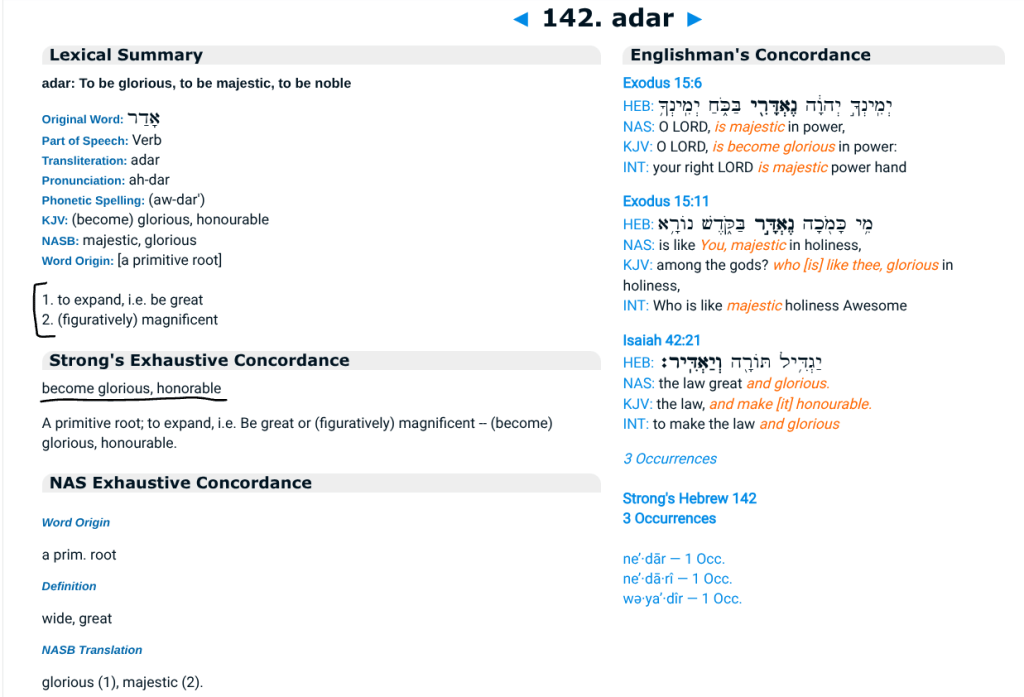
Isaiah 42:21
The LORD is well pleased for his righteousness’ sake; he will magnify the law, and make it honourable.
This prophecy says the Law would be magnified and made honorable.
Why?
Because Israel had profaned it.
They broke it.
They misrepresented it.
They brought shame to God’s name among the nations.
No one had righteousness on their own.
Romans 3:23 (KJV)
For all have sinned, and come short of the glory of God;
So when Isaiah says the Law would be magnified, that means it would be:
- Expanded
- Made great
- Made glorious
Not lowered. Not weakened.
How Did Christ Magnify the Law?
Go back to Matthew 5.
After verse 17, if you keep reading, Christ says:
“You have heard that it was said… but I say unto you…”
He wasn’t destroying the Law.
He was correcting the false interpretations and traditions that had been added to it.
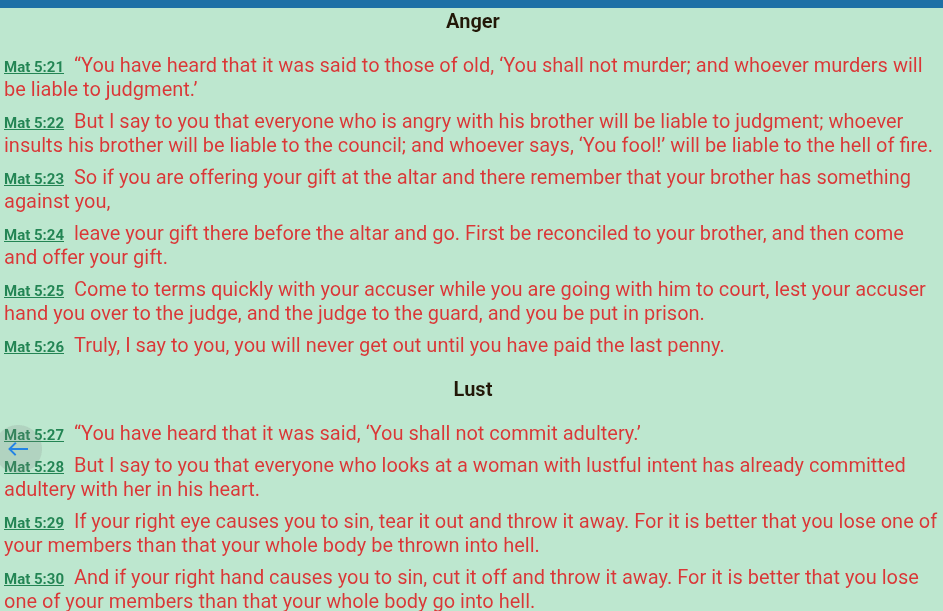
Example: Adultery
Under the Law, adultery was the physical act.
But in Matthew 5:27–28, Christ says if you even look with lust, you are guilty in your heart.
He expands it.
He goes deeper.
He shows the true intent.
That’s magnifying the Law.
Example: Divorce
Moses permitted divorce because of hardness of heart.
Christ restores the original standard.
Again — not lowering the Law.
Making it honorable.
Removing Man-Made Traditions
The Pharisees added traditions that actually caused people to break God’s commandments.
Matthew 15:3
But he answered and said unto them, Why do ye also transgress the commandment of God by your tradition?
They were bringing shame to the Law by twisting it.
Christ restored it to its true purpose:
- Mercy
- Justice
- Faithfulness
He showed the heart behind it.
So the second way Christ fulfilled the Law is this:
- He kept it perfectly.
- He magnified it — by revealing its true depth and removing corrupt traditions.
He didn’t weaken it.
He exposed its full meaning.
That’s fulfillment.
The Law Is Fulfilled in Love
Galatians 5:14
For all the law is fulfilled in one word, even in this; Thou shalt love thy neighbour as thyself.
That’s clear.
The Law is fulfilled in this:
Love your neighbor as yourself.
So how is the Law fulfilled?
By walking in love.
The whole purpose of the Law was to teach you how to love:
- How to deal with your neighbor
- How not to harm people
- How to reflect God’s character
This is quoting:
Leviticus 19:18
Thou shalt not avenge, nor bear any grudge against the children of thy people, but thou shalt love thy neighbour as thyself: I am the LORD.
That’s moral law.
That’s how you treat people.
Romans 13:8–10
8 Owe no man any thing, but to love one another: for he that loveth another hath fulfilled the law.
9 For this, Thou shalt not commit adultery, Thou shalt not kill, Thou shalt not steal, Thou shalt not bear false witness, Thou shalt not covet; and if there be any other commandment, it is briefly comprehended in this saying, namely, Thou shalt love thy neighbour as thyself.
10 Love worketh no ill to his neighbour: therefore love is the fulfilling of the law.
Notice what commandments are listed:
- Adultery
- Murder
- Stealing
- False witness
- Coveting
All moral commands.
So when it says “if there be any other commandment,” it’s not switching to feast days or dietary laws.
It’s staying in the same category moral law.
And Paul says clearly:
Love is the fulfillment of the Law.
If you walk in love, you are automatically doing what the Law aimed to produce.
You don’t need to go back under the Mosaic system to learn righteousness.
Walk in love.
Christ Summarized the Whole Old Testament
Matthew 22:37–40
37 Jesus said unto him, Thou shalt love the Lord thy God with all thy heart, and with all thy soul, and with all thy mind.
38 This is the first and great commandment.
39 And the second is like unto it, Thou shalt love thy neighbour as thyself.
40 On these two commandments hang all the law and the prophets.
Everything hangs on love.
Love God.
Love your neighbor.
That was the heart of the Law and the Prophets.
The Law of Christ
Galatians 6:2
Bear ye one another’s burdens, and so fulfil the law of Christ.
We are not under the Law of Moses.
We fulfill the Law of Christ.
What is that?
John 13:34
A new commandment I give unto you, That ye love one another; as I have loved you, that ye also love one another.
That’s higher.
Moses said love your neighbor as yourself.
Christ says love as I have loved you.
That’s sacrificial love.
John 15:12–13
12 This is my commandment, That ye love one another, as I have loved you.
13 Greater love hath no man than this, that a man lay down his life for his friends.
That’s the new standard.
The End of the Commandment
1 Timothy 1:5
Now the end of the commandment is charity out of a pure heart, and of a good conscience, and of faith unfeigned:
The goal of the Law was love.
Not outward performance only — but love from a pure heart.
And how do believers walk in that?
Through the Spirit.
Galatians 5:6
For in Jesus Christ neither circumcision availeth any thing, nor uncircumcision; but faith which worketh by love.
Faith works through love.
When you walk in the Spirit, you produce love.
And when you walk in love, you fulfill the Law.
So in summary so far:
Christ fulfilled the Law:
- By keeping it perfectly.
- By magnifying it and restoring its true meaning.
- By bringing it to its goal — love.
The Law was fulfilled.
Not destroyed.
Fulfilled.
Christ Fulfilled the Ceremonial and Sacrificial Law
Now we deal with the ceremonial aspect.
Not the moral law we already covered that.
This is about sacrifices, feast days, dietary laws, Sabbaths — the ritual system.
The Law Was a Shadow
Hebrews 10:1
For the law having a shadow of good things to come, and not the very image of the things, can never with those sacrifices which they offered year by year continually make the comers thereunto perfect.
The Law was a shadow.
A shadow points to something real.
It was not the final reality.
The sacrifices offered every year never made anyone perfect.
They were temporary.
They pointed forward.
Christ Is the Reality
Hebrews 10:10
By the which will we are sanctified through the offering of the body of Jesus Christ once for all.
Once.
Not yearly.
Not repeated.
Not ongoing.
Hebrews 10:14
For by one offering he hath perfected for ever them that are sanctified.
One offering.
Perfected forever.
That’s fulfillment.
That’s why the idea of returning to animal sacrifices makes no sense.
The shadow has no purpose once the substance arrives.
Colossians 2:16–17
16 Let no man therefore judge you in meat, or in drink, or in respect of an holyday, or of the new moon, or of the sabbath days:
17 Which are a shadow of things to come; but the body is of Christ.
This includes:
- Dietary laws
- Feast days (Passover, Pentecost, Tabernacles)
- New moons
- Sabbaths
They were shadows.
Christ is the substance.
You cannot be judged for not keeping shadows once the reality has come.
If someone keeps them as cultural custom, that’s different.
But spiritually required? No.
They were fulfilled.
Christ Is Our Passover
1 Corinthians 5:7
Purge out therefore the old leaven, that ye may be a new lump, as ye are unleavened. For even Christ our passover is sacrificed for us:
In the Old Testament, you sacrificed a lamb.
Now?
Christ is the Passover Lamb.
And how do you keep the true Passover?
By purging the old leaven.
Meaning:
Put away the old sinful life.
That’s the fulfillment.
Not killing another animal.
So now the full picture is clear:
Christ fulfilled the Law:
- By keeping it perfectly.
- By magnifying it and restoring its true meaning.
- By bringing its moral goal to love.
- By fulfilling its sacrificial and ceremonial shadows.
The Law was not destroyed.
It reached its purpose.
It pointed to Him.
And once He came, the system was completed.
Christ Fulfilled the Passover
Hebrews 11:28
Through faith he kept the passover, and the sprinkling of blood, lest he that destroyed the firstborn should touch them.
The Passover in Exodus was not random.
It was prophetic.
It was pointing forward.
The lamb in Exodus was a shadow.
Christ is the reality.
The Passover Lamb Pointed to Christ
In Exodus:
- The lamb had to be without blemish.
→ Christ was without sin. - It had to be a male of the first year.
→ Points to Christ. - It had to be set apart.
→ Christ was chosen and separated. - No bone was to be broken.
→ Fulfilled in John 19:36 (KJV) For these things were done, that the scripture should be fulfilled, A bone of him shall not be broken. - The lamb was roasted in fire.
→ Points to suffering. - The blood was applied to protect from judgment.
→ Christ’s blood covers believers from judgment.
The destroyer passed over houses covered in blood.
Now judgment passes over those covered by Christ.
That’s fulfillment.
Not a repetition.
A completion.
The Passover was never the final system.
It was pointing to:
- Forgiveness
- Righteousness
- Eternal life
Christ is the true Lamb.
The shadow ended when the substance came.
Christ Fulfilled the Law by Bearing Its Curse
Earlier we saw:
- The Law required perfection.
- If you failed, there was a curse attached.
So the question becomes:
If the Law had a curse for breaking it, how is that fulfilled?
Galatians 3:13
Christ hath redeemed us from the curse of the law, being made a curse for us: for it is written, Cursed is every one that hangeth on a tree:
The Law said if someone is hanged on a tree, they are cursed.
Christ was crucified.
Even though He was sinless, He took the curse.
Our sin was placed on Him.
Justice was satisfied.
The Law did not fail.
Its penalty was carried out.
The Curse Applied to All — Jew and Gentile
Some think only Israel was under this system.
But even Gentiles were accountable.
Romans 2:14–15
14 For when the Gentiles, which have not the law, do by nature the things contained in the law, these, having not the law, are a law unto themselves:
15 Which shew the work of the law written in their hearts, their conscience also bearing witness, and their thoughts the mean while accusing or else excusing one another;
The Gentiles did not receive the written Law like Israel.
But the moral law was written on their hearts.
Their conscience acted like a courtroom:
- Accusing
- Excusing
- Testifying
Nobody is without excuse.
So the curse of sin affected everyone.
Going all the way back to Adam.
Death spread to all.
Christ came to redeem both Jew and Gentile.
The Great Exchange
2 Corinthians 5:21
For he hath made him to be sin for us, who knew no sin; that we might be made the righteousness of God in him.
He knew no sin.
Yet He was treated as sin.
Why?
So we could be counted righteous.
Our sin was imputed to Him.
His righteousness is imputed to us.
That’s substitution.
That’s fulfillment.
What the Law Could Not Do
Romans 8:3
For what the law could not do, in that it was weak through the flesh, God sending his own Son in the likeness of sinful flesh, and for sin, condemned sin in the flesh:
The Law is perfect.
The weakness was never the Law.
The weakness was us.
The Law can:
- Expose sin
- Condemn sin
- Declare a curse
But it cannot remove sin.
It’s like a mirror.
It shows dirt.
It doesn’t wash it off.
Christ condemned sin in the flesh.
Not by destroying the Law.
But by satisfying it.
So now we have the full picture of fulfillment:
Christ fulfilled the Law:
- By keeping it perfectly.
- By magnifying it and restoring its true meaning.
- By bringing it to its goal — love.
- By fulfilling its sacrificial shadows.
- By bearing its curse and satisfying its penalty.
The Law did not fail.
It was completed.
The Law Required Perfection — We Could Not Do It
The Law demanded:
- Perfect obedience
- Holiness
- Righteous living
- Death as the penalty for failure
No one ever kept it perfectly.
Not in thoughts.
Not in words.
Not in actions.
If we could have fulfilled it ourselves, then:
- Justification would be by the Law.
- Grace would not be necessary.
- Christ would not need to come.
But the Law was “weak through the flesh.”
The weakness was never the Law.
The weakness was us.
The Law Had a Purpose — and a Timeline
Galatians 3:19
Wherefore then serveth the law? It was added because of transgressions, till the seed should come to whom the promise was made…
Why was the Law given?
Because of sin.
It was given to:
- Expose sin
- Define sin
- Restrain sin
- Show guilt
And it had a timeline.
It says: “till the seed should come.”
The Seed is Christ.
That means the Law was temporary.
Galatians 3:24–25
24 Wherefore the law was our schoolmaster to bring us unto Christ, that we might be justified by faith.
25 But after that faith is come, we are no longer under a schoolmaster.
The Law was a tutor.
A tutor is not permanent.
A tutor prepares you for something greater.
The Law prepared people for Christ.
Once Christ came, the system changed.
You are no longer under the schoolmaster.
The End of the Law
Romans 10:4
For Christ is the end of the law for righteousness to every one that believeth.
That’s clear.
Christ is the end of the Law for righteousness.
If you want righteousness now, it comes by faith.
Not by going back to the Mosaic system.
Obedience still matters — but obedience flows from faith.
It does not produce justification.
Justification produces obedience.
So now we’ve established:
- The Law had demands.
- The Law had a curse.
- The Law had sacrifices.
- The Law had a purpose.
- The Law had a timeline.
Christ fulfilled:
- Its standard
- Its penalty
- Its shadows
- Its purpose
- Its timeframe
The Law reached its end in Him.
Now we can address the next major question:
What does it mean that “heaven and earth” must pass away?
“Till Heaven and Earth Pass Away”
Matthew 5:18
For verily I say unto you, Till heaven and earth pass, one jot or one tittle shall in no wise pass from the law, till all be fulfilled.
Now someone might say:
“Do you still see heaven and earth? Then the Mosaic Law must still be in place.”
Let’s deal with that carefully.
First: Even If You Take It Literally
Let’s assume for a moment this is talking about the physical heaven and earth.
The verse still says:
“Till all be fulfilled.”
That means once all is fulfilled, something changes.
So even under that interpretation, the Law is not eternal in its Mosaic form.
It had a fulfillment point.
Second: Have Things Changed From the Law?
The verse says:
Nothing will pass from the Law until heaven and earth pass and all is fulfilled.
So here’s the simple test:
Have any parts of the Mosaic Law changed?
If yes — then “heaven and earth” cannot be literal physical creation still standing unchanged.
Because changes clearly happened.
Example 1: Animal Sacrifice
Under Moses:
Animal sacrifices were required.
Under Christ:
He is the sacrifice.
That is not a small change.
That is a major system shift.
That’s more than a “jot.”
Example 2: Circumcision
Galatians 5:6 (KJV)
For in Jesus Christ neither circumcision availeth any thing, nor uncircumcision; but faith which worketh by love.
Under Moses:
If you were not circumcised, you were cut off.
Under Christ:
Circumcision gives no spiritual advantage.
That’s a covenantal change.
Example 3: Oaths
Under the Law:
You could swear — just don’t swear falsely.
Under Christ:
“Swear not at all.”
That’s another shift.
So clearly, changes occurred.
So what does “heaven and earth” mean?
Heaven and Earth as Covenant Language
In the Old Testament, “heaven and earth” is often covenantal language.
It refers to witnesses of a covenant.
Deuteronomy 30:19
I call heaven and earth to record this day against you, that I have set before you life and death, blessing and cursing…
God wasn’t calling the sky and the dirt to testify in court.
It’s covenant witness language.
Deuteronomy 31:28
…that I may speak these words in their ears, and call heaven and earth to record against them.
Again — covenant language.
So in Matthew 5:18, “heaven and earth” is referring to the covenant world of Moses.
The old covenant system.
When Was “All Fulfilled”?
Christ said everything written about Him must be fulfilled.
John 19:30
When Jesus therefore had received the vinegar, he said, It is finished: and he bowed his head, and gave up the ghost.
“It is finished.”
What was finished?
The task.
The mission.
The covenantal requirement.
The fulfillment.
A Covenant Requires Death
Hebrews 9:16–17
16 For where a testament is, there must also of necessity be the death of the testator.
17 For a testament is of force after men are dead…
A covenant (testament) goes into effect after death.
While Christ lived, He was under the Law.
After He died, the New Covenant was activated.
The Old Covenant Passed Away
Hebrews 8:13
In that he saith, A new covenant, he hath made the first old. Now that which decayeth and waxeth old is ready to vanish away.
Once the New Covenant was established, the Old was obsolete.
So “heaven and earth” passing away refers to:
The old covenant order ending.
Not physical planets disappearing.
So Matthew 5:18 means this:
Nothing would change in the Law until:
- Christ fulfilled it.
- The old covenant reached its completion.
- The covenant order transitioned.
Once that happened — changes followed.
And we clearly see those changes in the New Testament.
Hebrews 8:13 — The Old Covenant Vanishing
Hebrews 8:13
In that he saith, A new covenant, he hath made the first old. Now that which decayeth and waxeth old is ready to vanish away.
When this was written, the temple was still standing.
So when it says “ready to vanish away,” it wasn’t talking about 2,000 years later.
It was talking about that time.
The Old Covenant was already:
- Old
- Weak
- Being replaced
- Near disappearance
Why?
Because the New Covenant had already been established through Christ’s death.
It was legally ended at the cross.
It was publicly confirmed through the resurrection and preaching of the gospel.
It was historically finalized when the temple was destroyed in 70 AD.
That temple was the center of the Old Covenant system.
Once it was gone, the system was fully gone.
So “heaven and earth” passing away refers to that covenant world ending.
Matthew 5:19 — The Least Commandments
Matthew 5:19
Whosoever therefore shall break one of these least commandments, and shall teach men so, he shall be called the least in the kingdom of heaven…
This verse is often misunderstood.
Some say:
“If you teach the Mosaic Law is no longer binding, you won’t make the kingdom.”
But look at the context.
At this time:
They were still under the Old Covenant.
Christ had not yet died.
He was addressing hypocrisy.
Who Was Breaking the Commandments?
The Pharisees.
They were:
- Ranking laws as more important than others.
- Playing favoritism with commandments.
- Teaching but not practicing.
- Adding heavy burdens to people.
Matthew 23:2–4
They sat in Moses’ seat.
They told people what to do.
But they did not practice what they preached.
They were hypocrites.
So when Christ says someone will be “least,” He is rebuking that mindset.
This is not about teaching New Covenant fulfillment.
This is about hypocrisy and law manipulation.
Matthew 5:20 — Righteousness That Exceeds
Matthew 5:20
For I say unto you, That except your righteousness shall exceed the righteousness of the scribes and Pharisees, ye shall in no case enter into the kingdom of heaven.
Their righteousness was:
- Outward only
- Performance-based
- Hypocritical
- Self-dependent
How does ours exceed theirs?
Two ways.
1. Not Hypocrisy
Actually practice what you teach.
Obey from the heart.
Not just outward performance.
2. Righteousness by Faith
Romans 10:10
For with the heart man believeth unto righteousness…
Our righteousness comes from faith.
Not from law performance.
Romans 3:21–22
But now the righteousness of God without the law is manifested…
Even the righteousness of God which is by faith of Jesus Christ unto all and upon all them that believe…
Notice the words:
“But now.”
That shows change.
Righteousness is now revealed apart from the Mosaic Law.
It comes by faith.
That is how our righteousness exceeds theirs.
Christ is our righteousness.
Summary
- The Law was fulfilled because Christ kept it perfectly and bore its penalty.
- The Prophets were fulfilled because He did exactly what they said — He suffered, died, and rose again.
- “Heaven and earth” passed away because it refers to the Old Covenant system.
- The Mosaic Law reached its end in Christ.
He did not destroy it.
He completed it.
He fulfilled it.
And now righteousness comes by faith — not by going back to Moses.
In the next video, Lord willing, we will deal with:
- What is the New Covenant?
- When did it start?
- How did it replace the Old?
That’s important because some still teach we are under the Old Covenant.
That will be addressed clearly and directly.
This breakdown was longer on purpose.
These are foundational topics.
Not surface-level.
Rewatch it.
Take notes.
Study the verses.
Be familiar with the flow of the argument.
And Lord willing, the next teaching will go deeper into the New Covenant.
If you’re looking for a place to grow and learn the Scriptures, reach out.
Shalom.

 The Bible Vault