
This is a full video breakdown of this article
Many people ask a fair question:
If the Sabbath was fulfilled, and believers are already in God’s rest spiritually through Christ, then why do we still see the Sabbath being kept in the New Testament?
That question deserves a real answer.
This breakdown will address common arguments used to say Christians must still keep the Sabbath, while also explaining Romans 14 and freedom under the new covenant.
A Key Rule: Descriptive vs Prescriptive
Before going deeper, you need one simple Bible principle:
Descriptive
This means the Bible is describing something that happened.
Prescriptive
This means the Bible is commanding what should be done.
This matters because many people read a verse where something happened and assume it is automatically a command for all believers.
That causes confusion.
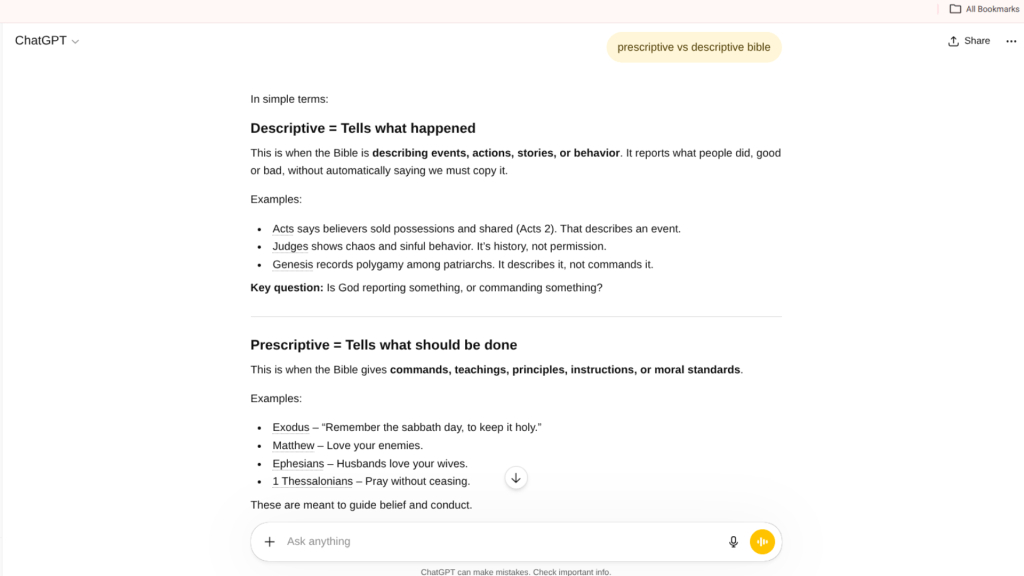
Examples
Descriptive:
- Abraham took Hagar
- David danced before the Lord
- Believers sold possessions in Acts
These verses describe events.
Prescriptive:
- Love your enemies
- Let him that stole steal no more
- Remember the Sabbath day (under the law)
These are commands.
If you don’t separate these two categories, you will misunderstand many scriptures.
First Argument: Christ Kept the Sabbath
We should keep the Sabbath because Christ kept the Sabbath, and we are to follow Christ.
That sounds reasonable at first.
But the real question is:
Why did Christ keep the Sabbath?
Once you answer that, the confusion disappears.
Christ Going to Synagogue
Luke 4:16 (KJV)
And he came to Nazareth… and, as his custom was, he went into the synagogue on the sabbath day, and stood up for to read.”
This verse is:
Descriptive
It is telling you what Christ did.
It is not commanding Christians to keep the Sabbath under Exodus law.
Why Did Christ Keep It?
Because Christ was living before the cross.
Before His death and resurrection, He was operating under the covenant that was still in effect.
Christ Was Born Under the Law
Galatians 4:4 (KJV)
But when the fulness of the time was come, God sent forth his Son, made of a woman, made under the law.”
This is very clear.
Christ was:
- Born under the law
- Living under the law
- Obligated to fulfill the law
That includes:
- Sabbath observance
- Feast days
- Dietary laws
- Covenant requirements
Christ kept the Sabbath because:
He was under the Mosaic covenant during His earthly ministry.
That does not automatically mean believers after the cross are under the same covenant terms.
What Changed?
After Christ died and rose again:
The new covenant was established.
That means believers are no longer standing where Christ stood before the cross.
The New Covenant Begins Through Christ’s Death
To understand Sabbath questions in the New Testament, we must remember when the covenant changed.
Hebrews 9:16–17
Heb 9:16-17
16 For where a will is involved, the death of the one who made it must be established.
17 For a will takes effect only at death, since it is not in force as long as the one who made it is alive.
A covenant or will takes effect after death.
That means:
Christ’s new covenant was brought into force through His death and resurrection.
Second Argument: Matthew 24 Mentions the Sabbath
Some say:
If the Sabbath was fulfilled, why did Christ say pray your flight is not on the Sabbath?
Let’s read it.
Matthew 24:19–20 (KJV)
“And woe unto them that are with child…
But pray ye that your flight be not in the winter, neither on the sabbath day.”
At first glance, some assume this proves future Sabbath obligation.
But context matters.
Who Was Christ Speaking To?
Look earlier in the chapter:
Matthew 24:15–16
When ye therefore shall see the abomination of desolation… stand in the holy place…
Then let them which be in Judaea flee into the mountains.”
Notice the audience:
Those in Judea
This is a local warning tied to Jerusalem and the temple.
Primary Context: The Destruction of Jerusalem
Matthew 24, in its primary historical setting, points to the coming judgment on Jerusalem culminating in 70 AD, when the Romans destroyed the temple.
Christ was warning those people to flee when those events came.
Why Mention Winter and Sabbath?
Christ says pray it is not:
- In winter
- On the Sabbath
Why?
Winter:
Travel would be harder.
Sabbath:
Movement and normal activity would be heavily restricted in that Jewish environment.
Descriptive, Not Prescriptive
This is important:
Christ is describing conditions people would face.
He is not issuing a new command that all Christians must keep Sabbath forever.
He is speaking to people living in a Jewish setting where Sabbath customs still shaped daily life.
Even Acts Shows This
Acts 1:12
Act 1:12 Then returned they unto Jerusalem from the mount called Olivet, which is from Jerusalem a sabbath day’s journey.
This phrase shows the cultural reality of the time.
People travel limited was on the Sabbath.
Logic
If Matthew 24 were a binding Sabbath law for all Christians, why is the warning specifically centered on Judea?
Because the immediate context is tied to those people, those conditions, and that coming judgment.
“Why Were They Keeping Sabbath After Christ Died?”
This is another argument people bring up.
And honestly, it’s a fair question.
Let’s read it.
Luke 23:55-56 (KJV)
And the women also… followed after, and beheld the sepulchre…
And they returned, and prepared spices and ointments; and rested the sabbath day according to the commandment.”
People read this and say:
“Wait a minute brother. Christ already died. Why are they still keeping the Sabbath?”
Because the new covenant was not fully revealed yet.
Remember what we already read in Hebrews 9.
The new covenant officially comes into effect through Christ’s death and resurrection.
While Christ was in the tomb:
that was basically the final moment of the old covenant system.
These women were still following what they already knew under the law.
They did not yet fully understand:
- the meaning of the cross
- the resurrection
- the new covenant freedom
That’s all it is.
This is before the resurrection happened.
Very simple.
Another Argument: “Why Was Paul Keeping Sabbath?”
This is probably one of the biggest arguments.
People say:
Okay brother, but Paul kept the Sabbath after the resurrection.”
Fair question.
Let’s read it.
Acts 17:1-2 (KJV)
Now when they had passed through Amphipolis and Apollonia, they came to Thessalonica, where was a synagogue of the Jews:
2 And Paul, as his manner was, went in unto them, and three sabbath days reasoned with them out of the scriptures,
Now watch this carefully.
The verse is not saying:
- Paul believed Christians must keep Sabbath
- Paul was under bondage to the law
No.
The verse is explaining Paul’s strategy.
Why Did Paul Go There?
Because that’s where the Jews gathered.
Simple.
Paul went where people were already assembled and ready to hear Scripture.
That’s why it says:
reasoned with them out of the scriptures.”
Meaning:
- he was proving Christ from the Old Testament
- showing them Jesus is the Messiah
- explaining prophecy
That’s why he went there.
Paul Explains This Himself
This is the verse that clears everything up.
1 Corinthians 9:19-20
19 Even though I am a free man with no master, I have become a slave to all people to bring many to Christ.
20 When I was with the Jews, I lived like a Jew to bring the Jews to Christ. When I was with those who follow the Jewish law, I too lived under that law. Even though I am not subject to the law, I did this so I could bring to Christ those who are under the law.
Notice that.
Paul says:
- he is free
- but adapts himself to reach people
Then he says:
…to them that are under the law, as under the law…”
Then watch this:
…though not being myself under the law…”
That’s the key.
Paul literally tells you:
he is not under that law system.
So why does he still do certain customs around Jews?
To reach them.
Paul Was Meeting People Where They Were
Paul is basically saying:
“If I’m around Jews, I adapt to them so I can teach them Christ.”
That’s wisdom.
Then He Says This
1 Corinthians 9:21
21 When I am with the Gentiles who do not follow the Jewish law, I too live apart from that law so I can bring them to Christ. But I do not ignore the law of God; I obey the law of Christ.
Meaning when Paul was around Gentiles:
he did not force Jewish customs on them.
He adapted to their setting too.
But then he says:
…being not without law to God, but under the law to Christ…”
Meaning:
- Paul was not lawless
- he still followed Christ
- still lived holy
But not under the Mosaic covenant system.
What About Titus?
This is why Paul didn’t force Titus to get circumcised.
Why?
Because Titus was a Gentile.
Paul refused to put Jewish covenant requirements on Gentiles.
Paul’s Whole Point
Paul was trying to remove unnecessary barriers so people could hear the gospel.
That’s why he says:
1 Corinthians 9:22
“I am made all things to all men, that I might by all means save some.”
That verse is beautiful.
Paul humbled himself to help people where they were at.
What Does “Weak” Mean?
When Paul talks about weak people later:
He’s not talking about:
- weak muscles
- weak physically
He means people who still had limited understanding about freedom in Christ.
And that’s exactly why Romans 14 matters.
Because Romans 14 goes deeper into:
- freedom
- opinions
- food laws
- special days
That’s why these topics connect together.
Romans 14 Explained
The Weak in Faith
Romans 14:1-2
As for the one who is weak in faith, welcome him, but not to quarrel over opinions.
2 One person believes he may eat anything, while the weak person eats only vegetables.
Paul says the weak believer has limitations.
Not because those limitations are true.
But because that’s all they understand right now.
So let’s say Paul eats chicken.
But now he’s around believers who think eating meat is wrong.
Paul is not gonna walk in there eating chicken in front of them because it’s gonna offend them.
So even though he has freedom, he limits his freedom out of love.
That’s the point.
Don’t Judge Each Other
Romans 14:3-4
3 Let not the one who eats despise the one who abstains, and let not the one who abstains pass judgment on the one who eats, for God has welcomed him.
4 Who are you to pass judgment on the servant of another? It is before his own master that he stands or falls. And he will be upheld, for the Lord is able to make him stand.
If somebody wants to avoid certain foods, cool.
But don’t condemn another believer over food.
That believer belongs to Christ, not you.
Christ is their master.
Not you.
One Esteems One Day
Romans 14:5
5 One person esteems one day as better than another, while another esteems all days alike. Each one should be fully convinced in his own mind.
This is the Sabbath issue.
One believer says:
- “I wanna worship on Saturday.”
- “I wanna keep feast days.”
Another believer understands:
- every day belongs to God.
Paul says let every person be convinced in their own mind.
Meaning:
this is personal conviction.
Not universal law.
Weak vs Strong
The weaker believer still thinks:
- dietary laws required
- feast days required
- Sabbath required
The stronger believer understands:
- Christ fulfilled those things.
That’s why Paul calls them weak in faith.
Not as an insult.
They just haven’t fully understood liberty yet.
Both Still Want to Honor God
Romans 14:6
6 The one who observes the day, observes it in honor of the Lord. The one who eats, eats in honor of the Lord, since he gives thanks to God, while the one who abstains, abstains in honor of the Lord and gives thanks to God.
So even the weaker believer is still sincere.
That’s why Paul says stop judging each other.
Walking in Love
Growth takes time.
Some believers understand freedom faster than others.
That’s normal.
That’s why Paul says be patient with each other.
Walk in love.
We Don’t Live to Ourselves
Romans 14:7-8
7 For none of us lives to himself, and none of us dies to himself.
8 For if we live, we live to the Lord, and if we die, we die to the Lord. So then, whether we live or whether we die, we are the Lord’s.
Meaning our life belongs to God.
Even our death belongs to God.
So when believers disagree on:
- food
- feast days
- Sabbath days
Paul is saying stop acting like you’re each other’s judge.
We belong to Christ.
Christ Died for a Purpose
Romans 14:9-10
9 For to this end Christ died and lived again, that he might be Lord both of the dead and of the living.
10 Why do you pass judgment on your brother? Or you, why do you despise your brother? For we will all stand before the judgment seat of God;
Christ died for a reason.
He came to save His people and redeem us from the condemnation that came through the law.
Then He rose again:
- victorious over death
- victorious over the grave
And now Christ is Lord over:
- the living
- and the dead
So Paul asks:
why are you condemning your brother over personal convictions?
That’s the point.
We All Stand Before God
Romans 14:10-12
10 Why do you pass judgment on your brother? Or you, why do you despise your brother? For we will all stand before the judgment seat of God;
11 for it is written, “As I live, says the Lord, every knee shall bow to me, and every tongue shall confess to God.”
12 So then each of us will give an account of himself to God.
One day:
- every thought
- every action
- every word
will be judged.
So instead of trying to control everybody else’s conscience:
focus on your own walk too.
Stop Being a Stumbling Block
Romans 14:13
13 Therefore let us not pass judgment on one another any longer, but rather decide never to put a stumbling block or hindrance in the way of a brother.
Paul says:
- stop condemning each other
- stop causing confusion for weaker believers
That’s the point.
Nothing Is Unclean in Itself
Romans 14:14
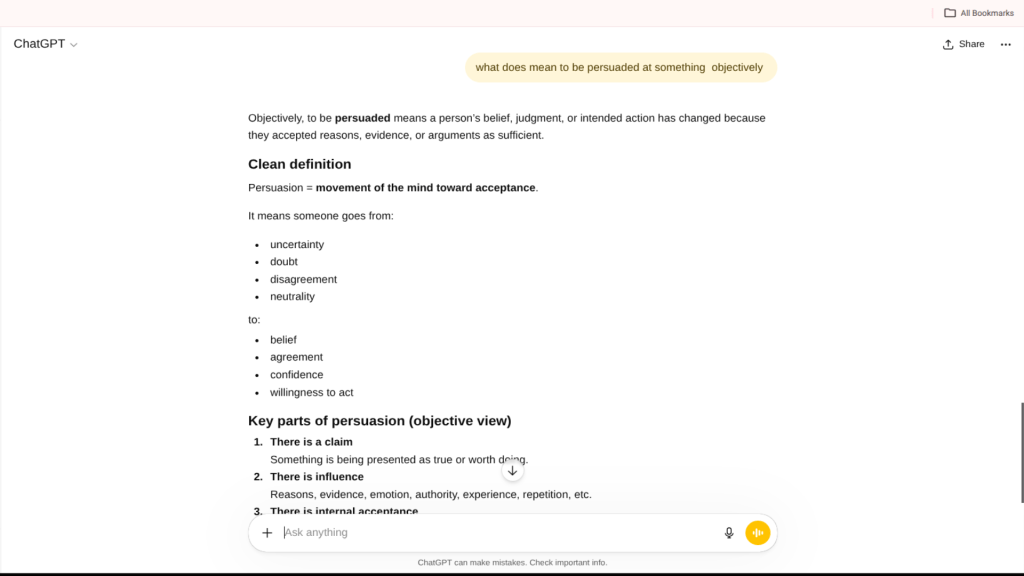
14 I know, and am persuaded by the Lord Jesus, that there is nothing unclean of itself: but to him that esteemeth any thing to be unclean, to him it is unclean.
Paul says he was:
persuaded by Jesus.
Meaning:
his understanding changed.
Before Christ, Paul believed certain foods were unclean because he grew up under the Mosaic law.
But Christ gave him a fuller understanding.
Christ Already Taught This
Matthew 15:11
11 it is not what goes into the mouth that defiles a person, but what comes out of the mouth; this defiles a person.”
Food itself does not spiritually defile you.
What defiles a person is:
- hatred
- evil thoughts
- adultery
- wickedness
That comes from the heart.
That’s Christ’s teaching.
Walking in Love
Romans 14:15-16
15 But if thy brother be grieved with thy meat, now walkest thou not charitably. Destroy not him with thy meat, for whom Christ died.
16 Let not then your good be evil spoken of:
If your brother is struggling with something, don’t purposely throw it in his face.
That’s not love.
You’re damaging their conscience.
Not sending them to hell.
But confusing them spiritually.
The Kingdom Is Bigger Than Food
Romans 14:17
For the kingdom of God is not meat and drink; but righteousness, and peace, and joy in the Holy Ghost.
The kingdom is not about:
- food rules
- drink rules
- external rituals
It’s about:
- righteousness
- peace
- joy
That’s what matters.
Pursue Peace
Romans 14:18-20
18 For he that in these things serveth Christ is acceptable to God, and approved of men.
19 Let us therefore follow after the things which make for peace, and things wherewith one may edify another.
20 For meat destroy not the work of God. All things indeed are pure; but it is evil for that man who eateth with offence.
Paul says stop destroying peace over food arguments.
Food itself is not the issue.
The issue is:
how you use your freedom.
Don’t Cause People to Stumble
Romans 14:21
It is good neither to eat flesh, nor to drink wine, nor any thing whereby thy brother stumbleth, or is offended, or is made weak.
If you know something weakens your brother:
don’t do it around them.
Simple.
That’s love.
Keep Certain Freedoms Private
Romans 14:22
Hast thou faith? have it to thyself before God. Happy is he that condemneth not himself in that thing which he alloweth.
If you understand your liberty:
use it wisely.
You don’t gotta publicly prove your freedom all the time.
Romans 14:23
And he that doubteth is damned if he eat, because he eateth not of faith: for whatsoever is not of faith is sin.
That’s the point.
If somebody does something while doubting in their conscience:
to them it becomes sin.
Not because the thing itself is evil.
But because they are acting against their conscience.
That’s why Paul says don’t pressure weaker believers.
Final Point
Romans 14 is about:
- freedom
- love
- patience
- conscience
Not forcing personal convictions on everybody else.
That’s the whole point of the chapter.

 The Bible Vault