Galatians 3 is a chapter every Christian should understand.
You don’t have to remember every verse word for word, but you should know the main argument and why it matters.
The big subjects are:
Faith
The promise given to Abraham
The purpose of the law
The big question is:
Why was the law given if salvation was going to be through faith?
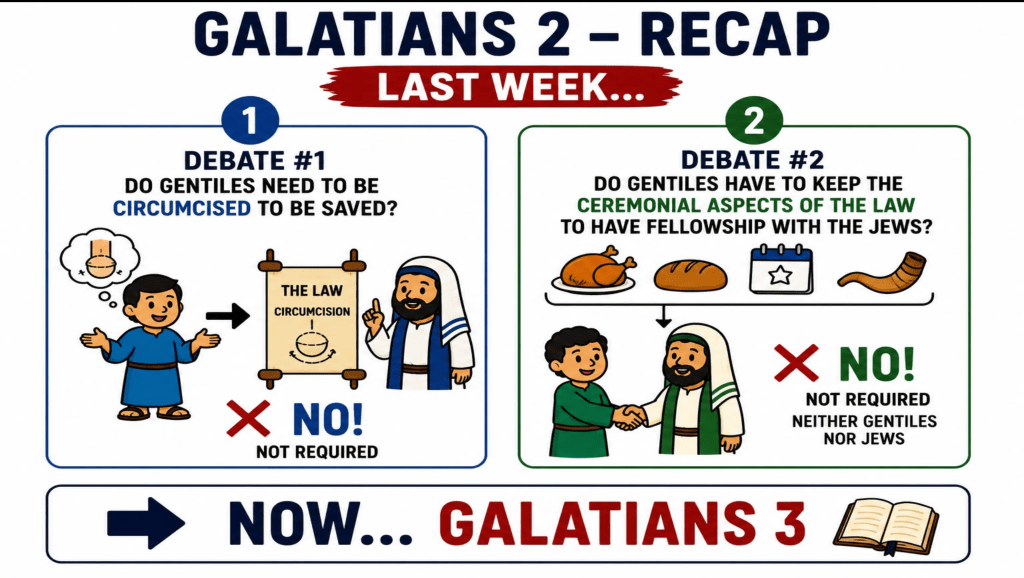
The Same Problem From Galatians 2
Galatians 2 dealt with whether Gentiles had to be circumcised and keep the ceremonial parts of the Mosaic law to be saved.
The answer was no.
Now that same problem shows up again in Galatians 3.
The Galatians started with faith, but they were being pulled back toward the law.
Who Hath Bewitched You?
Galatians 3:1
O foolish Galatians, who hath bewitched you, that ye should not obey the truth, before whose eyes Jesus Christ hath been evidently set forth, crucified among you?
Paul is basically asking, What happened to you?
Christ had already been clearly preached to them.
Then Paul asks:
Galatians 3:2
This only would I learn of you, Received ye the Spirit by the works of the law, or by the hearing of faith?
How did you receive the Spirit?
Was it because you kept the law?
Or was it through hearing and believing the gospel?
Paul makes them go back to their own experience.
They didn’t receive the Spirit because they had already done enough works.You Started By Faith
Galatians 3:3
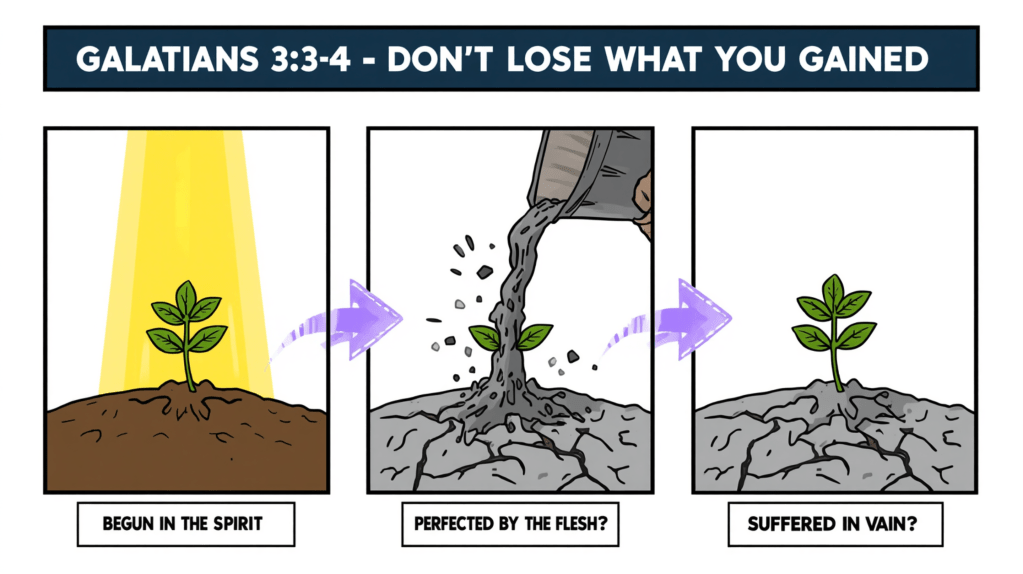
Are ye so foolish? having begun in the Spirit, are ye now made perfect by the flesh?
You started by faith.
Now you’re trying to finish by works?
That’s the problem.
The flesh is trusting in what you can do instead of trusting in what Christ has done.
Philippians 3:3
we are the circumcision, which worship God in the spirit, and rejoice in Christ Jesus, and have no confidence in the flesh.
Don’t put your confidence in yourself.
Don’t put your confidence in how well you keep rules.
Don’t put your confidence in how many good works you’ve done.
Galatians 3:4
Have ye suffered so many things in vain? if it be yet in vain.
You already suffered for believing the gospel.
You went through all of that because of your faith in Christ.
So why turn around now and act like you need the works of the law to finish what faith started?
Then Paul continues:
Galatians 3:5
He therefore that ministereth to you the Spirit, and worketh miracles among you, doeth he it by the works of the law, or by the hearing of faith?
God wasn’t working through them because they were good enough to keep the law.
They heard the gospel, believed it, and received the Spirit through faith.
Galatians 3:6–10
Galatians 3:6 Even as Abraham believed God, and it was accounted to him for righteousness.”
Abraham believed God, and his faith was counted as righteousness. Abraham had works, but his works weren’t what justified him. The point goes back to the promise God made before the law.
Galatians 3:7 Know ye therefore that they which are of faith, the same are the children of Abraham.”
The true children of Abraham are those who are of faith. It’s not simply about physical descent. The promise is connected to faith.
Galatians 3:8 And the scripture, foreseeing that God would justify the heathen through faith, preached before the gospel unto Abraham, saying, In thee shall all nations be blessed.”
God already planned to justify the Gentiles through faith. He preached this to Abraham beforehand when He said all nations would be blessed through him. That promise ultimately points to Christ, the promised seed.
Galatians 3:9 So then they which be of faith are blessed with faithful Abraham.”
So those who are of faith are blessed with Abraham. The blessing isn’t based on entering into Israel’s law system. Faith connects us to the promise.
Then Paul shows the other side:
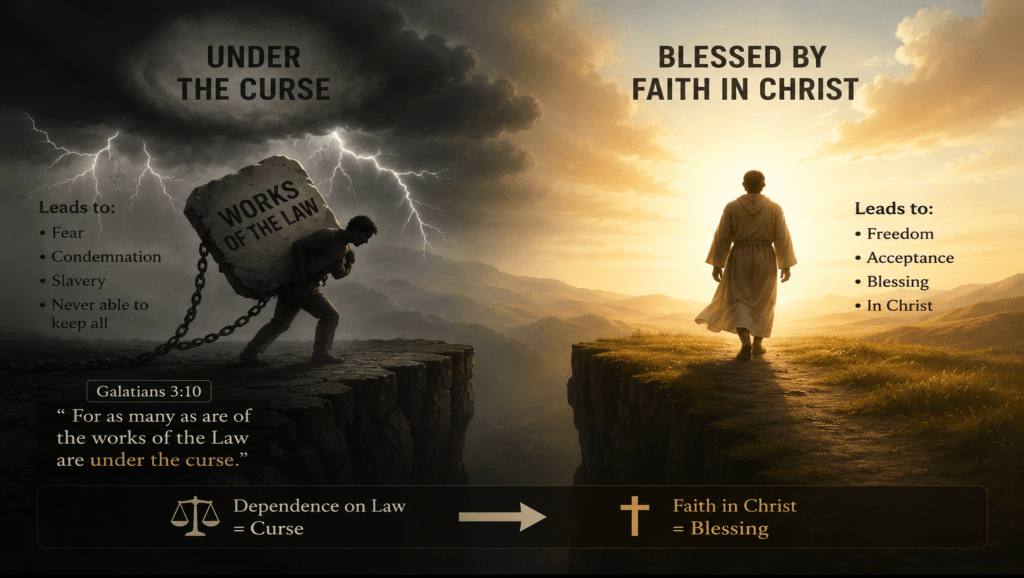
Galatians 3:10 For as many as are of the works of the law are under the curse…”
If you’re depending on the law for justification, you’re under its curse because the standard is all things written in the law. You can’t pick and choose. If the law is your system of justification, you have to keep everything.
Deuteronomy 27:26 Cursed be he that confirmeth not all the words of this law to do them. And all the people shall say, Amen.”
That’s the standard. All the words.
And Romans 3:19 shows what the law ultimately does:
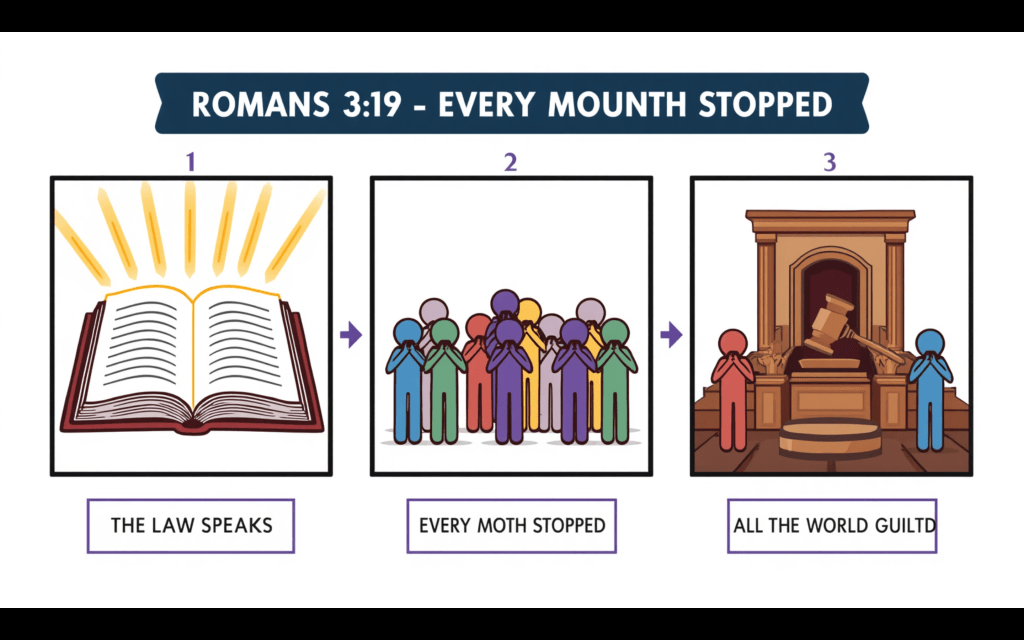
Romans 3:19 Now we know that what things soever the law saith, it saith to them who are under the law: that every mouth may be stopped, and all the world may become guilty before God.
The law shuts every mouth because nobody can stand before God claiming they perfectly kept it.
The Law Cannot Justify
None of us can stand before God claiming that we perfectly kept the law.
All of us are guilty before it.
That’s the first reason the law cannot be our system of justification.
It’s impossible.
But now the question comes up again:
If the law cannot justify us, why was it given in the first place?
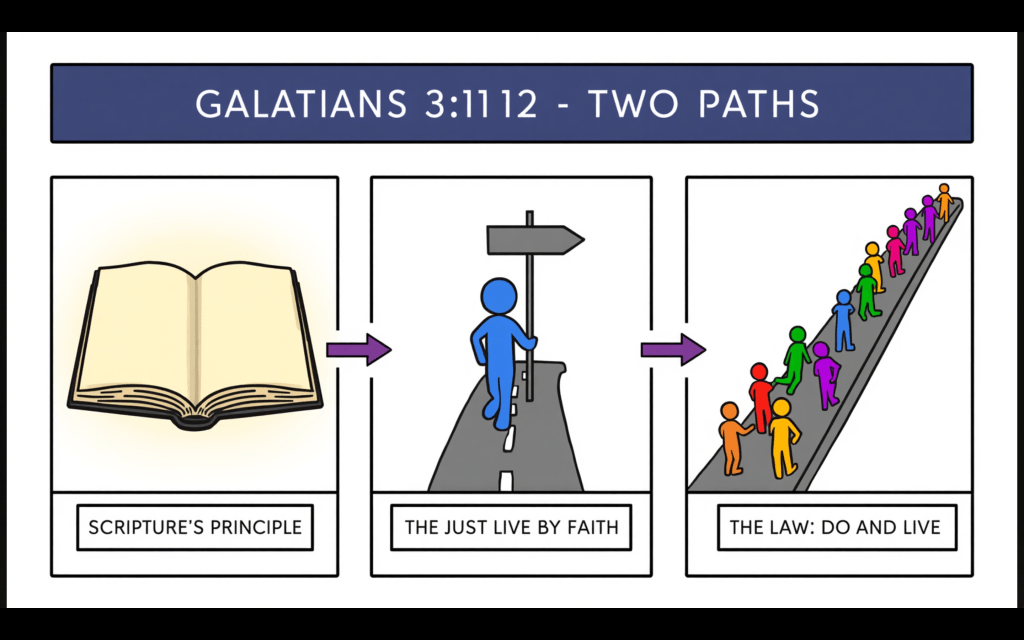
The Just Shall Live By Faith
Galatians 3:11
But that no man is justified by the law in the sight of God, it is evident: for, The just shall live by faith.”
Paul gives us another reason.
First, the whole world is guilty before God.
Second, Scripture says the just shall live by faith.
Then Paul says:
Galatians 3:12
And the law is not of faith: but, The man that doeth them shall live in them.”
Paul isn’t saying the Old Testament had no faith.
He’s talking about using the law as a system of justification.
These are two different systems.
The law says, in effect, do this and live by it.
Faith trusts God’s promise and depends on what God has provided.
So if somebody chooses the law as their system of justification, they’re putting themselves under the standard of the law.
And that’s why the statement about the doers of the law has to be understood in context.
Paul isn’t saying Christians are justified by keeping the law.
He’s showing what happens if you choose the law as your system of justification: you’re judged according to whether you actually did what the law requires.
And we’ve already established the problem.
The whole world is guilty.
So trying to justify yourself through the law is basically a suicide mission.
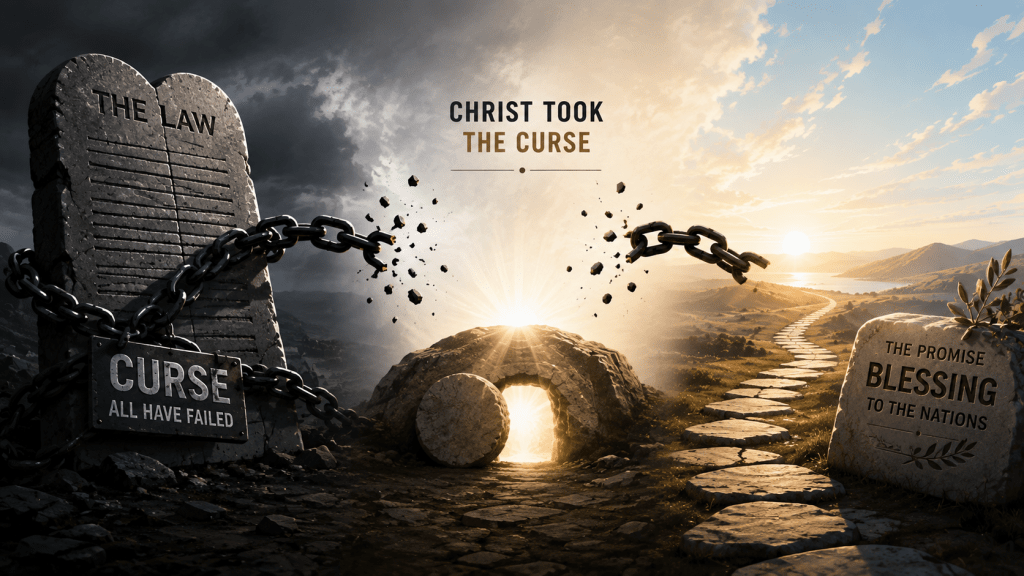
Christ Took the Curse
Now Paul gets to the answer:
Galatians 3:13
Christ hath redeemed us from the curse of the law, being made a curse for us: for it is written, Cursed is every one that hangeth on a tree:”
Remember the standard we just covered.
If you fail the law, you’re under the curse.
The curse means judgment, God’s wrath, and condemnation.
So if the whole world is guilty, what did God do?
Instead of giving us the judgment we deserved, He sent Christ.
Christ kept the law perfectly. He met the standard we couldn’t meet.
But then the question is:
What about us?
We didn’t keep the law perfectly.
That’s where Christ’s death comes in.
Deuteronomy 21:23
His body shall not remain all night upon the tree, but thou shalt in any wise bury him that day; (for he that is hanged is accursed of God;) that thy land be not defiled, which the LORD thy God giveth thee for an inheritance.”
Christ being hanged on a tree wasn’t some random detail.
His death fit the standard Scripture had already established concerning the cursed one.
Christ took the curse.
Paul explains it another way:
2 Corinthians 5:21
For he hath made him to be sin for us, who knew no sin; that we might be made the righteousness of God in him.”
This isn’t saying Christ became a sinful person.
Christ knew no sin.
The point is that He took on the judgment and curse connected with sin so that we could become righteous in Him.
Not in the law.
Not in ourselves.
Not because we’re such good people.
In Christ.
The Curse Had to Be Dealt With First
Now connect this back to the promise made to Abraham.
God promised that the nations would be blessed through Abraham.
But before that blessing could come to us, the curse had to be dealt with.
That’s what Christ did.
Galatians 3:14
That the blessing of Abraham might come on the Gentiles through Jesus Christ; that we might receive the promise of the Spirit through faith.”
Look at the connection:
Christ became a curse for us so that the blessing of Abraham could come to the Gentiles.
The curse had to be dealt with first.
Then the blessing flows through Christ to those who believe.
You can’t be under the curse and the blessing in the same sense at the same time.
Christ took care of the curse so that those who believe could receive the blessing.
The Promise Came Before the Law
Paul gives another example to show why the law couldn’t change God’s promise.
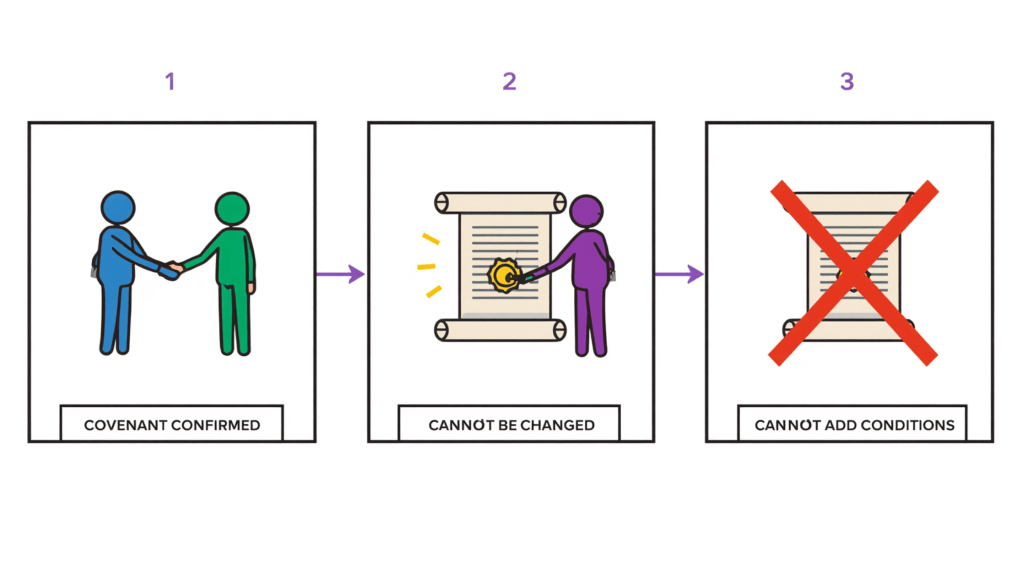
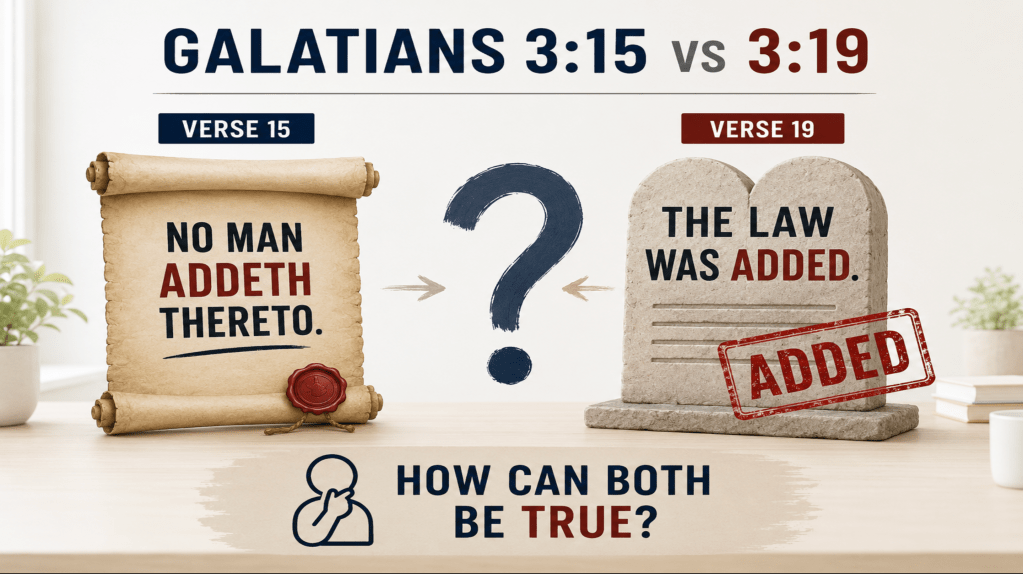
Galatians 3:15
Brethren, I speak after the manner of men; Though it be but a man’s covenant, yet if it be confirmed, no man disannulleth, or addeth thereto.”
Once a covenant is confirmed, you can’t come back later and add a new condition to it.
It’s like a father giving his son a house. The agreement is signed, sealed, and official. Then five years later Uncle Bob comes out saying, “Actually, you need to pay $7,000 before you can have the house.”
Uncle Bob doesn’t have that authority.
The covenant was already established.
That’s important because God gave the promise to Abraham before the law was given.
Galatians 3:16
Now to Abraham and his seed were the promises made. He saith not, And to seeds, as of many; but as of one, And to thy seed, which is Christ.”
The promise wasn’t talking about many different seeds.
It points to one specific seed: Christ.
So when God promised Abraham that all nations would be blessed through him, that promise ultimately pointed to Christ.
The blessing doesn’t depend on Gentiles having to come through Israel’s law system. The promised seed is Christ.
Then Paul makes the timing clear.
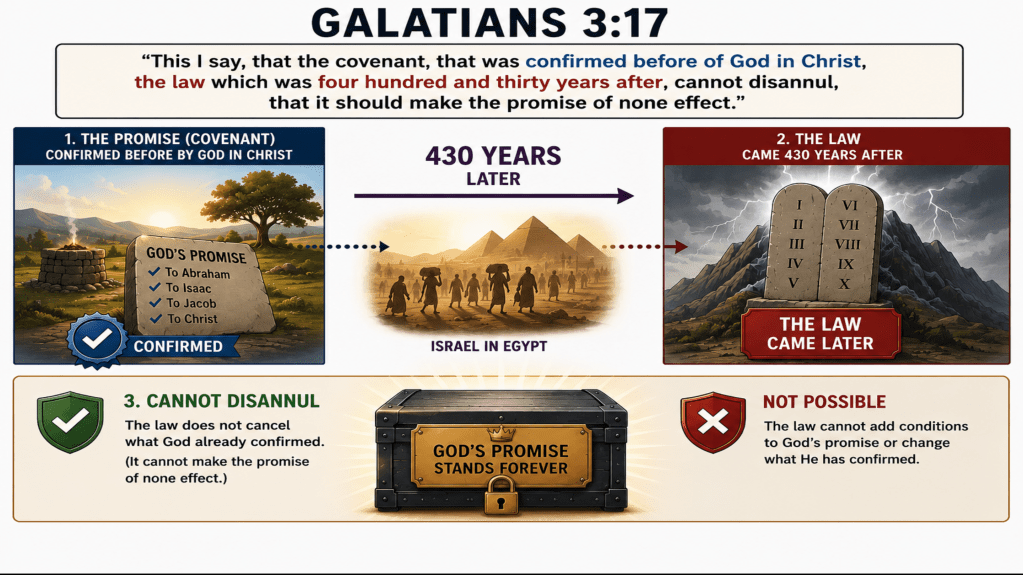
Galatians 3:17
And this I say, that the covenant, that was confirmed before of God in Christ, the law, which was four hundred and thirty years after, cannot disannul, that it should make the promise of none effect.”
Look at the order:
Promise first.
Law 430 years later.
The law couldn’t come later and cancel the promise God had already made.
Then Paul makes the point even stronger.
Galatians 3:18
For if the inheritance be of the law, it is no more of promise: but God gave it to Abraham by promise.”
If the inheritance comes through keeping the law, then it’s no longer a promise.
That’s something you earned.
But God gave the promise to Abraham.
That’s the difference.
So now comes the big question:
If the law didn’t change the promise, why was it given?
Why Was the Law Added?
Galatians 3:19
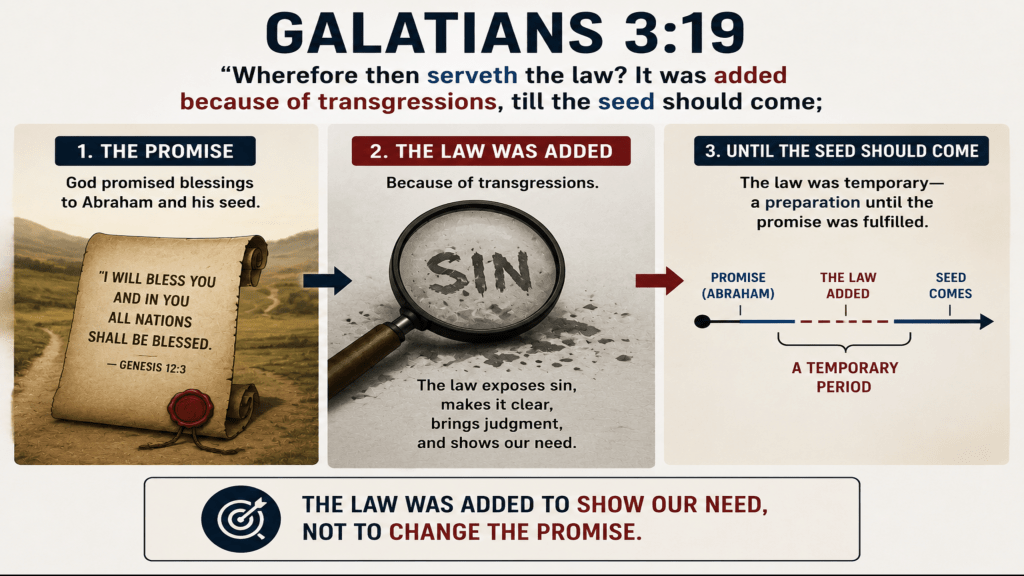
Wherefore then serveth the law? It was added because of transgressions, till the seed should come to whom the promise was made; and it was ordained by angels in the hand of a mediator.”
Two important things here.
First, why was the law added?
“Because of transgressions.”
The law wasn’t given to replace the promise or create another way to earn salvation.
It was given to expose sin, define sin, and show our guilt before God.
It showed how sinful we really were and why we deserved God’s judgment.
Second, how long was it meant to last?
“Till the seed should come.”
The seed is Christ.
So the Mosaic law was temporary. It wasn’t meant to be the permanent system of justification.
The law came after the promise. It couldn’t change the promise. It was added to expose sin and prepare the way for the promised seed.
The Law Exposes Sin
Romans 5 shows that the law didn’t simply limit sin. When the commandment came, sin increased.
Romans 5:20 Moreover the law entered, that the offence might abound. But where sin abounded, grace did much more abound:
The law made sin clearer.
Think about the flesh. You tell the flesh, “Thou shalt not commit adultery,” and the flesh naturally wants to do the opposite.
Paul explains this in Romans 7. The things he knows he shouldn’t do are the very things his flesh wants to do.
Romans 7:7 What shall we say then? Is the law sin? God forbid. Nay, I had not known sin, but by the law: for I had not known lust, except the law had said, Thou shalt not covet.
Romans 7:8 But sin, taking occasion by the commandment, wrought in me all manner of concupiscence. For without the law sin was dead.
Romans 7:19 For the good that I would I do not: but the evil which I would not, that I do.
It’s like a child. Tell a child, “Don’t do that,” and now curiosity makes them want to do it even more.
That’s what the law exposed.
It showed us how sinful we really are and how much we deserve God’s judgment.
Moses and Christ as Mediators
There’s another important point in verse 19.
The angels were involved in giving the law, and Moses stood as the mediator between God and the people.
But what about the New Covenant?
Christ is the mediator.
Moses represented a system that created distance between God and the people. Israel couldn’t even look directly at Moses’ face when he came down from the mountain because of the glory connected to the law.
Christ does the opposite.
Christ closes that distance.
Through Christ, we can come to God boldly instead of approaching Him with shame and separation.
And Christ is also the promised seed given to Abraham. He came in the flesh, fulfilled the law perfectly, and became the perfect mediator between God and man.
Is the Law Against the Promise?
Galatians 3:20 Now a mediator is not a mediator of one, but God is one.
Paul is showing the difference between the law given through a mediator and the promise God made directly. The law involved Moses as the mediator between God and Israel, while the promise ultimately rests on God Himself.
Galatians 3:21
Is the law then against the promises of God? God forbid: for if there had been a law given which could have given life, verily righteousness should have been by the law.”
Fair question.
If the law and the promise are different systems, are they against each other?
No.
The law was never given to give eternal life or righteousness. God already knew we couldn’t meet its standard.
So why give it?
To expose sin and show our guilt before God.
Galatians 3:22
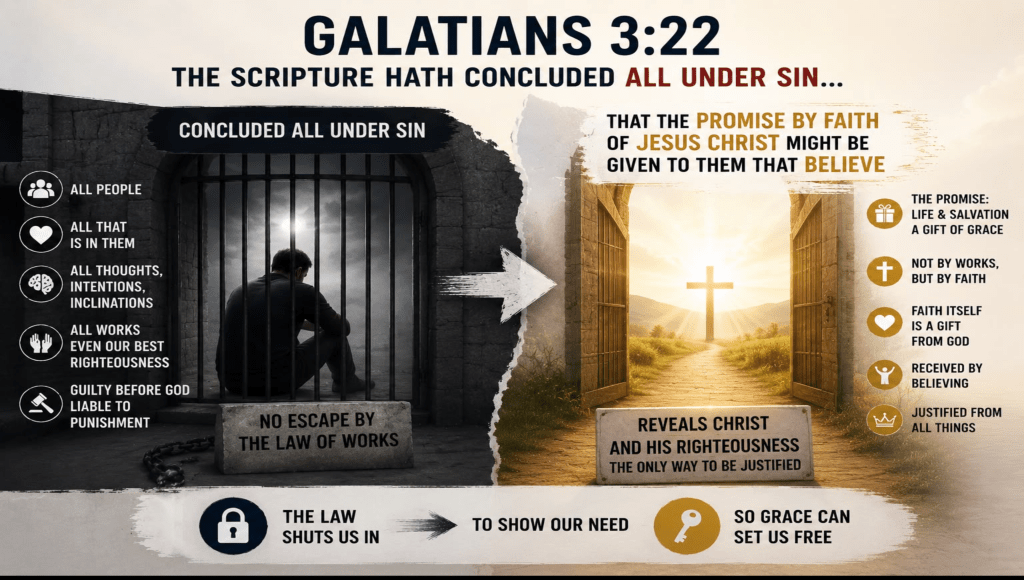
But the scripture hath concluded all under sin, that the promise by faith of Jesus Christ might be given to them that believe.”
Everything was shut up under sin.
Not just physical actions either. Your thoughts, imagination, and hidden sins count too.
So nobody can stand before God saying, “I’m a good person.”
The law shuts every mouth because it shows we’re guilty.
It’s like being locked up, waiting for somebody who can actually deliver you.
That’s Christ.
We couldn’t free ourselves. Christ took the judgment, humiliation, crucifixion, and punishment we deserved.
He paid the price.
Now we can receive the promise through faith.
Christ is our only hope.
The Law Was a Guardian Until Christ
Galatians 3:23
But before faith came, we were kept under the law, shut up unto the faith which should afterwards be revealed.”
We were shut up under the law—held there until the faith that would be revealed came.
This doesn’t mean Old Testament people had no faith. They did.
The point is that the full revelation of justification through faith in Christ hadn’t been revealed yet.
That’s progressive revelation God revealing His plan more clearly throughout Scripture.
Galatians 3:24
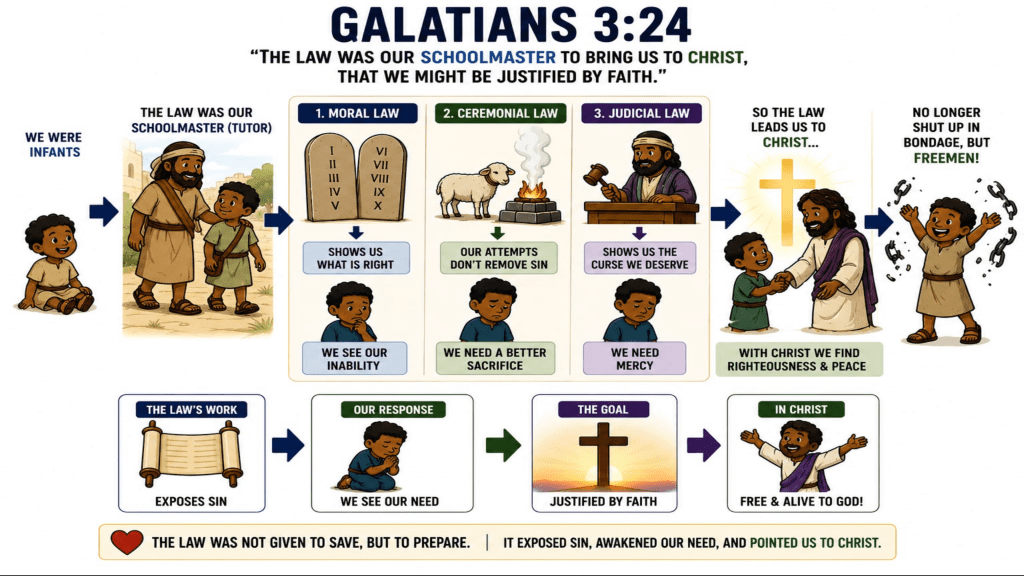
Wherefore the law was our schoolmaster to bring us unto Christ, that we might be justified by faith.”
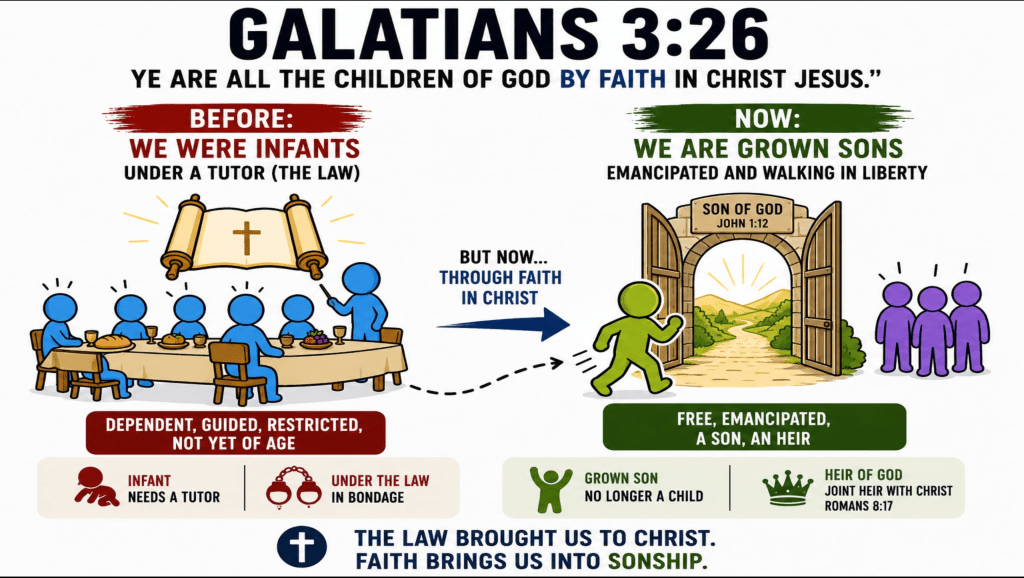
Think about a wealthy ruler leaving his child with a guardian.
The guardian trains the child, disciplines him, and teaches him how to behave until the master returns.
That’s what the law did.
It showed God’s character, showed our inability, and taught us that we needed a Redeemer.
It didn’t teach us how to save ourselves.
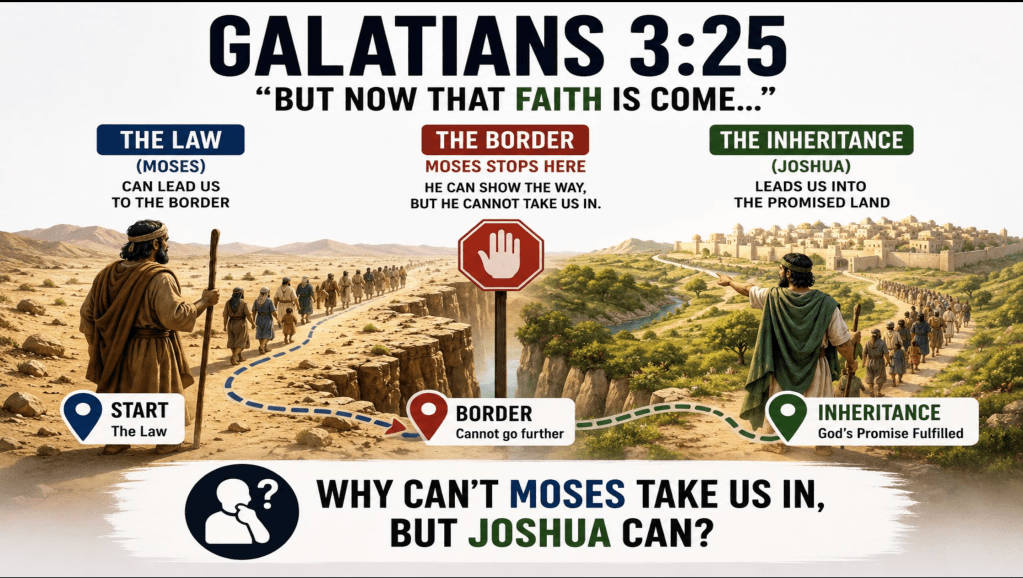
Galatians 3:25
But after that faith is come, we are no longer under a schoolmaster.”
Faith existed in the Old Testament. Paul is talking about the revealed system of justification through Christ.
Now that Christ has come, we’re no longer under the guardian.
You can still keep certain laws for personal reasons, but not as your system of justification.
Christ is the system.
The law did its job. It showed what was right, revealed God’s character, showed our inability, and pointed us toward Christ.
Even the sacrifices pointed forward to Him:
Hebrews 10:4
For it is not possible that the blood of bulls and of goats should take away sins.”
The sacrifices couldn’t actually remove sin.
Then Christ came.
The child finished training.
Now we’re free not free to live however we want, but free to follow Christ without using the law as our justification.
Moses and the Promised Land
Moses gave Israel the law, but he didn’t take them into the Promised Land.
Joshua did.
Joshua was a foreshadowing of Christ. Joshua and Jesus are the same name in different forms of translation.
The law could bring you to the border, but it couldn’t take you into the ultimate promise.
Christ does what the law couldn’t do. He fulfilled the law perfectly and gives us righteousness through faith in Him.
Galatians 3:26
For ye are all the children of God by faith in Christ Jesus.”
You’re no longer a child under a guardian.
You’re a child of God through faith in Christ.
Galatians 3:27
For as many of you as have been baptized into Christ have put on Christ.”
Baptism was the public sign of entering the faith of Christ.
Going into the water pictured His death.
Coming back up pictured His resurrection.
Water baptism is not a requirement to be saved.
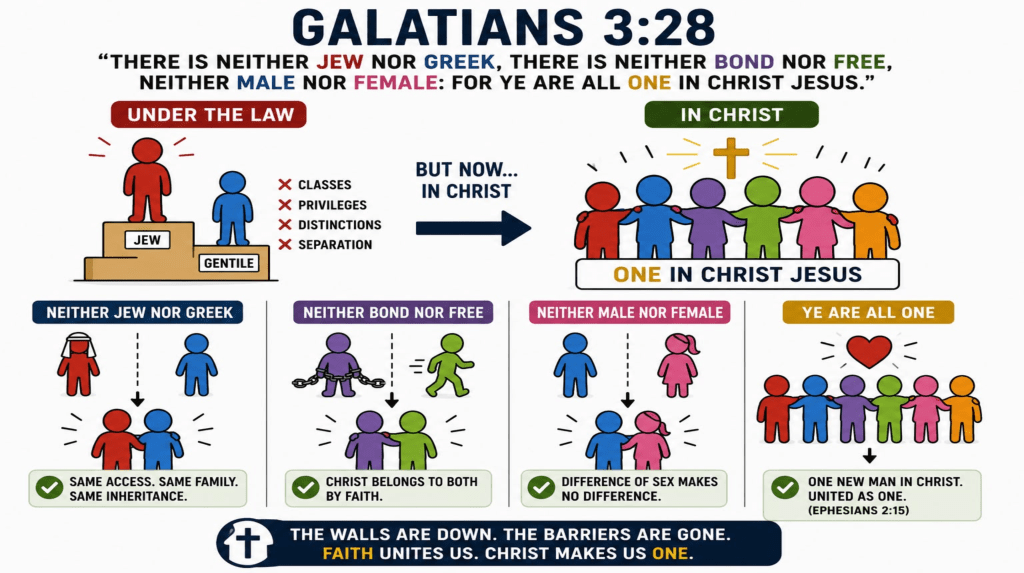
Galatians 3:28
There is neither Jew nor Greek, there is neither bond nor free, there is neither male nor female: for ye are all one in Christ Jesus.”
In Christ, there are no different levels of access to salvation.
Jew or Gentile — same access.
Slave or free — same access.
Male or female — same access.
This doesn’t mean men and women stop being men and women.
It means neither one has an advantage when it comes to salvation.
We are all one family in Christ.
Galatians 3:29
And if ye be Christ’s, then are ye Abraham’s seed, and heirs according to the promise.”
If you belong to Christ, you’re Abraham’s offspring according to the promise.
The promise isn’t based on physical status.
Jew and Gentile are brought together in Christ.
The same promise and access to salvation is available through Christ.
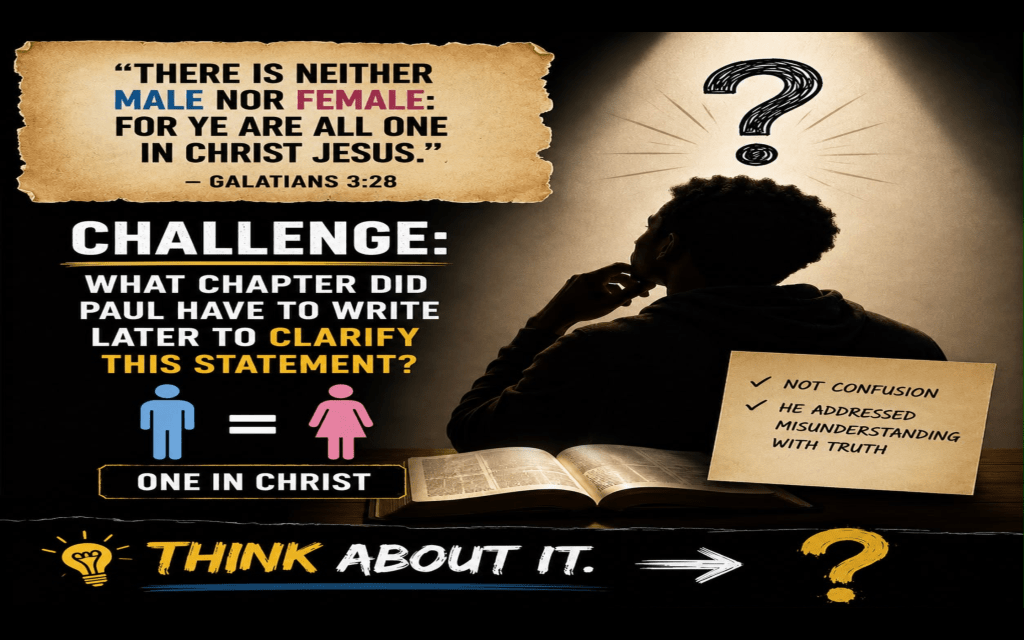
Side Question
What chapter did Paul have to write later to clarify “there is neither male nor female”?
That’s the challenge for the next study.
Think about where Paul later explains the roles and order of men and women so this statement isn’t misunderstood.
Related
By Eleazar
Given sense of the bible from A to Z through the power of the holy spirit.